Phosphoric Acid Mist Eliminator: Solving the HF and Solids Challenge in Wet Process Plants
Wet process phosphoric acid production is one of the most chemically demanding environments for mist elimination equipment. The gas streams leaving phosphoric acid reactors, flash coolers, and concentrator evaporators contain a combination that defeats standard mist elimination technology: phosphoric acid droplets, hydrofluoric acid vapor, suspended silica particles, and fluorosilicic acid mist — all present simultaneously.
Standard wire mesh demisters corrode rapidly in this environment. Conventional fiber bed designs foul prematurely with solid carryover. The result is frequent unplanned replacement, high maintenance costs, and persistent emission compliance failures.
Filtearth engineers fiber bed mist eliminators specifically for wet process phosphoric acid service — with fiber grades, material specifications, and drainage designs that address the combined HF, H₃PO₄, and solids challenge directly.
Why Wet Process Phosphoric Acid Is Different
Phosphoric acid is produced commercially by two routes: the thermal process and the wet process. The wet process — which accounts for the majority of global phosphoric acid production for fertilizer use — reacts phosphate rock with sulfuric acid to produce phosphoric acid and calcium sulfate (gypsum).
The chemistry of this reaction creates a uniquely challenging gas stream for mist elimination.
The Triple Threat: H₃PO₄, HF, and Solids
Phosphoric acid mist (H₃PO₄): Phosphoric acid droplets are generated during the reaction, flash cooling, and concentration stages. These droplets span a wide size range — from coarse droplets above 10 microns to fine submicron aerosols generated during evaporation.
Hydrofluoric acid (HF): Phosphate rock contains fluoride minerals. During the acid reaction, fluoride is released as hydrofluoric acid gas and fluorosilicic acid (H₂SiF₆) vapor. HF is one of the most corrosive substances encountered in chemical processing — it attacks glass, most metals, and many polymers rapidly. This eliminates most conventional fiber materials from consideration.
Silica and solid carryover: The phosphoric acid slurry contains suspended calcium sulfate (gypsum) and silica particles. Some of this solid material becomes entrained in the gas stream, particularly in reactor and flash cooler service. Solid particles in a fiber bed accumulate over time, blocking drainage paths, increasing pressure drop, and eventually blinding the fiber element if not managed correctly.
The combination of all three — corrosive liquid mist, HF vapor, and abrasive solids — is what makes wet process phosphoric acid service uniquely challenging and why generic fiber bed solutions frequently underperform.
Where Mist Is Generated
Reactor: The exothermic reaction between phosphate rock and sulfuric acid generates steam and acid mist. The reactor vent carries phosphoric acid droplets, HF vapor, and entrained slurry particles.
Flash cooler: Rapid pressure reduction in the flash cooler evaporates water and generates fine phosphoric acid and fluorosilicic acid mist. Flash cooler off-gas is typically the highest-mist-loading stream in a wet process phosphoric acid plant.
Concentrator evaporator: Dilute phosphoric acid from the reactor is concentrated to 54% P₂O₅ or higher in multiple-effect evaporators. The vapor leaving the evaporator carries phosphoric acid and fluorosilicic acid mist that must be captured before the vapor is vented or recycled.
Why Standard Mist Elimination Fails in Phosphoric Acid Service
Wire Mesh Demisters
Wire mesh demisters in phosphoric acid service fail through two mechanisms operating simultaneously:
Corrosion: HF attacks stainless steel wire mesh aggressively, even at relatively low concentrations. Mesh pads in reactor vent and flash cooler service typically show visible corrosion damage within 6 to 12 months of installation, with loss of wire integrity and progressive increase in mist penetration.
Fouling: Solid particles and gypsum crystals accumulate in the mesh pad, blocking the open structure. As fouling progresses, pressure drop increases and liquid drainage is impaired — leading to liquid flooding and mist re-entrainment. Fouled mesh pads cannot be effectively cleaned in-situ and must be replaced.
Standard Fiber Bed Designs
Standard fiber bed mist eliminators — designed for clean acid mist service in sulfuric acid or chlor-alkali plants — also struggle in wet process phosphoric acid service when applied without modification:
Fine fiber fouling: Fine fiber grades (3 to 8 microns) that provide high submicron collection efficiency are also highly susceptible to fouling by solid particles. Gypsum and silica accumulate in the fine fiber structure, progressively increasing pressure drop and blocking drainage.
Drainage limitation: At high liquid loading — characteristic of flash cooler and concentrator off-gas streams — standard fiber beds can experience liquid flooding if drainage capacity is insufficient. Flooded fiber beds exhibit sharply increased pressure drop and risk of liquid re-entrainment through the clean gas outlet.
Filtearth Engineering Solution for Phosphoric Acid Service
Coarser Fiber Grade for Solids Tolerance
The key design adaptation for wet process phosphoric acid service is the use of a coarser fiber grade than would be specified for clean acid mist service. Coarser fibers — typically 15 to 25 microns in diameter — provide wider inter-fiber spacing that allows solid particles to pass through or be flushed out during drainage, rather than accumulating to blind the fiber bed.
The trade-off: coarser fibers reduce Brownian diffusion efficiency for submicron particles. Filtearth balances this by optimizing bed thickness and packing density to maintain overall collection efficiency at 99.96% despite the coarser fiber specification.
Filtearth Proprietary Carbon Fiber — Engineered for HF Service
HF eliminates most conventional fiber materials from consideration for wet process phosphoric acid service:
- Standard glass fiber: Attacked by HF even at relatively low concentrations. Not suitable for reactor vent or flash cooler applications where HF is present.
- Polypropylene fiber: Moderate HF resistance but limited operating temperature (below 80°C) and inadequate resistance to concentrated phosphoric acid at elevated temperatures.
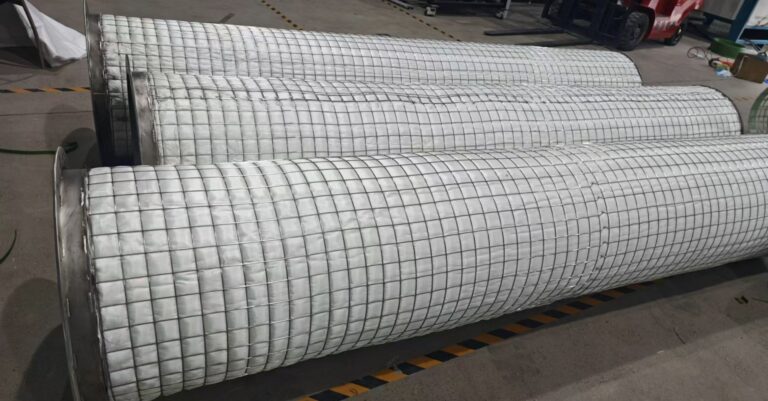
- Filtearth proprietary carbon fiber: Developed in-house specifically for HF-containing corrosive service. Provides complete resistance to HF, H₃PO₄, H₂SiF₆, and H₂SO₄ across all operating concentrations and temperatures up to 180°C. The carbon fiber structure maintains mechanical integrity under the combined chemical and thermal stress of wet process phosphoric acid service, delivering service life of 3 to 5 years where conventional materials fail within 6 to 18 months.
Filtearth specifies proprietary carbon fiber as standard for all wet process phosphoric acid mist eliminator applications where HF is present.
High-Drainage Design
To handle the elevated liquid loading of flash cooler and concentrator off-gas service, Filtearth designs phosphoric acid mist eliminators with:
- Reduced packing density in the outer fiber zone to allow high liquid throughput without flooding
- Enlarged liquid collection sump at the vessel base to handle peak liquid drainage rates
- Oversized drain nozzle to ensure free drainage without creating a liquid seal that could flood the fiber bed
- Steep vessel bottom angle to direct collected liquid to the drain without pooling
Two-Stage Configuration for High Solids Loading
For reactor vent service where solid loading is highest, Filtearth recommends a two-stage system:
Stage 1 — Coarse pre-separator: A polypropylene spray washer or impingement separator removes bulk solid carryover and coarse liquid droplets before the gas enters the fiber bed. This protects the fiber element from premature fouling.
Stage 2 — Proprietary carbon fiber bed: Operating on pre-cleaned gas with reduced solid loading, the fiber bed achieves 99.96% capture of remaining phosphoric acid and fluorosilicic acid mist.
Material Specifications for Phosphoric Acid Service
| Component | Recommended Material | Reason |
|---|---|---|
| Fiber medium | Filtearth proprietary carbon fiber | Complete HF, H₃PO₄, H₂SiF₆ resistance |
| Inner and outer screens | PP or acid-resistant FRP | HF and phosphoric acid resistance |
| Vessel shell | FRP or PP | Strong acid resistance at operating temperature |
| Drain nozzle and piping | PP or acid-resistant lined pipe | Phosphoric acid and HF resistance |
| Flange connection | PP or FRP | ANSI or DIN as specified |
Operating Specifications
| Parameter | Specification |
|---|---|
| Fiber material | Filtearth proprietary carbon fiber |
| Fiber diameter | 15–25 μm (coarse grade for solids tolerance) |
| Collection efficiency | 99.96% |
| Droplet capture range | 0.1–3 μm |
| Chemical resistance | HF, H₃PO₄, H₂SiF₆, H₂SO₄ |
| Shell material | FRP or PP |
| Operating temperature | Up to 120°C |
| Element diameter range | 200–1,500 mm |
| Outlet mist concentration | < 5 mg/Nm³ |
Industry Applications: Where Filtearth Phosphoric Acid Mist Eliminators Are Used
Phosphate Fertilizer Plants — Malaysia and Southeast Asia
Malaysia and Indonesia are significant phosphoric acid producers supplying diammonium phosphate (DAP) and monoammonium phosphate (MAP) fertilizers to the regional agricultural market. Filtearth has supplied proprietary carbon fiber bed mist eliminators to phosphate fertilizer production facilities in Malaysia, with documented performance in HF-containing acid mist service.
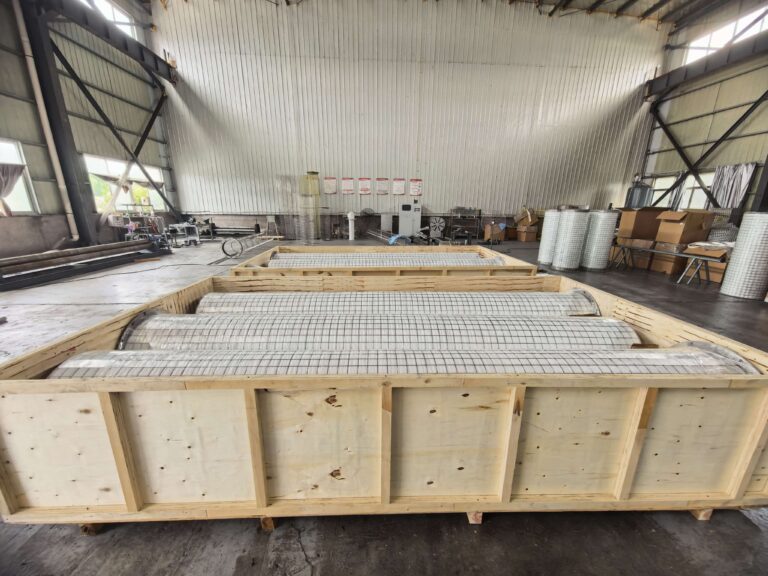
Reference: Phosphate fertilizer plant, Malaysia — Filtearth proprietary carbon fiber bed mist eliminator in phosphoric acid concentrator service. Delivered within 30-day production cycle.
Phosphoric Acid Plants — Middle East Fertilizer Industry
Saudi Arabia, Morocco, and Egypt are major phosphoric acid producers supplying the global fertilizer market. These facilities operate large-scale wet process phosphoric acid plants with multiple reactor, flash cooler, and concentrator trains — each requiring reliable mist elimination.
Middle East EPC contractors and plant operators sourcing phosphoric acid mist eliminators from European suppliers face 60 to 90 day lead times and high import costs. Filtearth provides equivalent performance at approximately 70% of the cost of European brands, with a 30-day production lead time and full material certification documentation.
Copper Mining Byproduct Phosphoric Acid — Latin America
Some Latin American mining operations produce phosphoric acid as a byproduct of mineral processing. These applications often combine the challenges of wet process phosphoric acid service with the high-solids loading characteristic of metallurgical operations — exactly the service conditions for which Filtearth’s coarse-fiber, high-drainage proprietary carbon fiber design is engineered.
Performance Comparison: Standard vs. Filtearth Phosphoric Acid Design
| Parameter | Standard Fiber Bed | Filtearth Phosphoric Acid Design |
|---|---|---|
| Fiber material | Specialty glass fiber | Filtearth proprietary carbon fiber |
| Fiber diameter | 3–8 μm | 15–25 μm (solids-tolerant) |
| HF resistance | Limited | Complete |
| Solids tolerance | Low | High |
| Service life in H₃PO₄ service | 6–18 months | 3–5 years |
| Collection efficiency | 95–99% | 99.96% |
| Outlet concentration | 10–50 mg/Nm³ | < 5 mg/Nm³ |
Frequently Asked Questions
Why is Filtearth proprietary carbon fiber specified for phosphoric acid service? Standard glass fiber is subject to attack by hydrofluoric acid, which is present in all wet process phosphoric acid gas streams. Filtearth’s proprietary carbon fiber was developed specifically to resist the combined chemical environment of HF, H₃PO₄, and H₂SiF₆ — delivering 3 to 5 years of service life where conventional fiber materials fail within 6 to 18 months. It is Filtearth’s standard specification for all phosphoric acid applications where HF is present.
Can Filtearth supply phosphoric acid mist eliminators to Malaysia, Saudi Arabia, and Egypt? Yes. Filtearth has an established supply record in Malaysia and supplies to fertilizer and chemical plants across the Middle East and North Africa. We ship to Port Klang (Malaysia), Dammam (Saudi Arabia), and Alexandria (Egypt), with complete export documentation as standard.
How does the coarser fiber grade maintain 99.96% collection efficiency? Coarser fibers have lower single-fiber collection efficiency for submicron particles than fine fibers. Filtearth compensates by optimizing bed thickness and packing density to achieve equivalent overall collection efficiency at the operating face velocity. The design is validated against the actual droplet size distribution of the specific process rather than generic parameters.
What is the expected service life of a proprietary carbon fiber bed in phosphoric acid service? In phosphoric acid concentrator service with moderate solid loading, Filtearth proprietary carbon fiber elements typically achieve 3 to 5 years of service life. In reactor vent service with high solid loading, a pre-separator upstream extends fiber bed service life significantly. Without pre-separation in high-solids service, element life may be 1 to 2 years.
Can existing vessels be retrofitted with Filtearth carbon fiber elements? Yes. Filtearth designs proprietary carbon fiber replacement elements to match existing vessel internal dimensions. Plants currently operating standard glass fiber or polypropylene fiber bed elements in phosphoric acid service can upgrade to Filtearth carbon fiber construction without vessel modification. Element diameters from 200 to 1,500 mm are available.
How does the cost compare to European suppliers? Filtearth fiber bed mist eliminators for phosphoric acid service are priced at approximately 70% of equivalent European brand specifications, with a 30-day production lead time versus 60 to 90 days for European suppliers. Full material certification and quality documentation is provided as standard.
Request a Technical Quotation
If you are evaluating fiber bed mist eliminators for a phosphoric acid reactor, flash cooler, or concentrator evaporator application in Malaysia, Saudi Arabia, Egypt, or anywhere in the Middle East, Southeast Asia, or Latin America, Filtearth is ready to provide a detailed technical proposal within 24 hours.
To receive a quotation, please provide:
- Application point (reactor vent, flash cooler, concentrator evaporator)
- Gas flow rate (m³/h or Nm³/h)
- Operating temperature and pressure
- HF concentration in gas stream (if known)
- Estimated solid loading (if known)
- Existing vessel dimensions (for retrofit applications)
- Required connection standard (ANSI / DIN / JIS)
Contact Henry Wang directly: Email: [email protected] WhatsApp: +86 159 365 10880
Response within 24 hours. Preliminary engineering assessment at no cost.