Chlor-Alkali Mist Eliminator India: CPCB Compliance | Filtearth
Chlor-alkali mist eliminator performance in Indian chlorine drying towers is under increasing scrutiny from CPCB regulators and plant engineers alike. India’s chlor-alkali industry — one of the largest in Asia — operates more than 30 membrane cell facilities producing chlorine and caustic soda for PVC, water treatment, textiles, and agrochemical industries. As CPCB tightens chlorine emission limits and plant operators face pressure to protect compressors from acid mist damage, the inadequacy of wire mesh demisters in chlorine drying tower service is becoming impossible to ignore.
This article explains the specific mist elimination challenges in Indian chlor-alkali plants, why standard wire mesh demisters fail to meet current and emerging CPCB requirements, and how Filtearth proprietary glass fiber bed mist eliminators solve the problem — at approximately 70% of the cost of imported European and American units, with a 30-day production lead time.
The Indian Chlor-Alkali Industry: Scale and Growth
India’s chlor-alkali sector has grown significantly over the past decade, driven by downstream demand from:
- PVC and chlorinated compounds: The construction boom across Indian cities has driven PVC pipe and fitting demand, pulling chlorine consumption higher
- Water treatment chemicals: Municipal water treatment expansion and industrial effluent treatment requirements
- Agrochemicals: Pesticide and herbicide manufacturing consuming chlorine and caustic soda
- Pharmaceuticals: API manufacturing requiring high-purity caustic soda
Major production clusters are located in Gujarat (Vadodara, Bharuch, Surat), Andhra Pradesh (Visakhapatnam), Maharashtra (Ratnagiri, Nashik), and Tamil Nadu (Chennai, Tuticorin). Facilities range from small membrane cell units producing 20 to 50 tonnes per day of chlorine to large integrated complexes producing 300 tonnes per day or more.
The Mist Elimination Challenge in Indian Chlor-Alkali Plants
The Chlorine Drying Circuit
Wet chlorine gas leaving the electrolysis cell contains moisture that must be removed before compression and liquefaction. The standard drying process contacts wet chlorine with sulfuric acid — typically 93 to 98% H₂SO₄ — in a packed drying tower. Dried chlorine gas exits the top of the drying tower and proceeds to the chlorine compressor.
Despite passing through the sulfuric acid drying circuit, the dried chlorine gas stream carries entrained mist droplets containing:
- Sulfuric acid (H₂SO₄): Carried over from the drying tower packing
- Hydrochloric acid (HCl): Formed by chlorine contact with residual moisture
- Chlorine-bearing droplets: Fine liquid aerosols containing dissolved chlorine
This mist — predominantly in the 0.1 to 3 micron size range — passes through standard wire mesh demisters without being captured. The consequences for Indian plant operators are direct and measurable.
Why Indian Plants Are Particularly Affected
Several factors specific to the Indian operating environment compound the mist elimination challenge:
Variable power supply: Frequent grid voltage fluctuations and power interruptions in Indian industrial zones cause electrolysis cell current variations that generate pulse-mode chlorine production. Current surges produce higher-than-normal gas flow rates through the drying circuit, increasing mist entrainment above steady-state design levels.
High ambient temperature and humidity: Indian tropical conditions — particularly in coastal Gujarat, Andhra Pradesh, and Tamil Nadu — mean the cooling water available for the drying circuit is warmer than in temperate climates. Warmer cooling water reduces the efficiency of inter-stage cooling between drying acid absorbers, leaving more residual moisture in the dried chlorine gas and increasing mist generation.
Aging infrastructure: Many Indian chlor-alkali plants were constructed in the 1980s and 1990s with wire mesh demisters specified for lower throughput than current production rates. As plants have debottlenecked to increase production, gas velocities through the original demisters have increased beyond design, further reducing mist capture efficiency.
Consequences of Inadequate Mist Elimination in Indian Plants
Chlorine Compressor Corrosion
The chlorine compressor — the highest-value rotating equipment in a chlor-alkali plant — is directly downstream of the drying tower mist eliminator. Acid mist carryover from the drying tower contacts compressor internals including impellers, diffusers, inter-stage coolers, and seals.
Stainless steel and titanium compressor components that would last 15 to 20 years in clean dry chlorine service corrode significantly faster when exposed to continuous acid mist carryover. Indian plant operators report compressor seal replacements every 12 to 18 months in plants with inadequate mist elimination — compared to 3 to 5 year intervals in plants with properly functioning fiber bed mist eliminators.
The economics are straightforward: a chlorine compressor seal replacement in Indian industrial service costs INR 8 to 20 lakhs including downtime. A Filtearth fiber bed mist eliminator for a typical Indian drying tower costs significantly less and eliminates the cause of premature seal failure.
CPCB Emission Limit Compliance
CPCB standards for chlor-alkali plants under the General Standards for Discharge of Environmental Pollutants (Environment Protection Rules, 1986 and amendments):
| Pollutant | Existing Plant Limit | New Plant Limit | Critically Polluted Area |
|---|---|---|---|
| Chlorine (Cl₂) | ≤ 15 mg/Nm³ | ≤ 5 mg/Nm³ | ≤ 5 mg/Nm³ |
| HCl | ≤ 50 mg/Nm³ | ≤ 20 mg/Nm³ | ≤ 10 mg/Nm³ |
| Acid mist | ≤ 50 mg/Nm³ | ≤ 20 mg/Nm³ | ≤ 5 mg/Nm³ |
Wire mesh demisters in chlorine drying tower service typically achieve outlet concentrations of 50 to 150 mg/Nm³ for acid mist — above the existing plant limit in many cases and far above the new plant and critically polluted area limits. Plants in Gujarat’s GIDC estates and Andhra Pradesh’s industrial clusters — several of which are CEPI-designated critically polluted areas — face the 5 mg/Nm³ limit.
Fiber bed mist eliminators with Filtearth proprietary glass fiber achieve outlet concentrations below 5 mg/Nm³ — meeting all CPCB category limits including the most stringent critically polluted area standard.
Filtearth Chlor-Alkali Mist Eliminator Solution for Indian Plants
Proprietary Glass Fiber Construction
Filtearth uses proprietary glass fiber as standard for Indian chlor-alkali drying tower mist eliminator applications. The fiber provides:
- Complete resistance to sulfuric acid at all drying tower operating concentrations (93 to 98% H₂SO₄)
- Resistance to HCl at the concentrations present in dried chlorine gas
- Fine fiber diameter (3 to 8 microns) for maximum submicron collection efficiency through Brownian diffusion and direct interception
- Stable fiber structure under continuous gas flow at Indian operating temperatures
Collection efficiency: 99.96% Target outlet concentration: < 5 mg/Nm³
Two-Stage Configuration for High Liquid Loading
For Indian plants operating at or above original design throughput — where liquid loading at the drying tower top is elevated — Filtearth recommends a two-stage system:
Stage 1 — Wire mesh pre-separator (existing or new): If a wire mesh demister is already installed in the drying tower, it serves as the first stage, capturing droplets above 5 microns. If no demister is installed, a new wire mesh pad is specified in Hastelloy C-276 or titanium for chlorine and H₂SO₄ resistance.
Stage 2 — Filtearth proprietary glass fiber bed: Installed in a separate external vessel on the drying tower outlet line. Captures the remaining submicron acid mist to achieve outlet concentrations below 5 mg/Nm³.
Retrofit into Existing Vessels
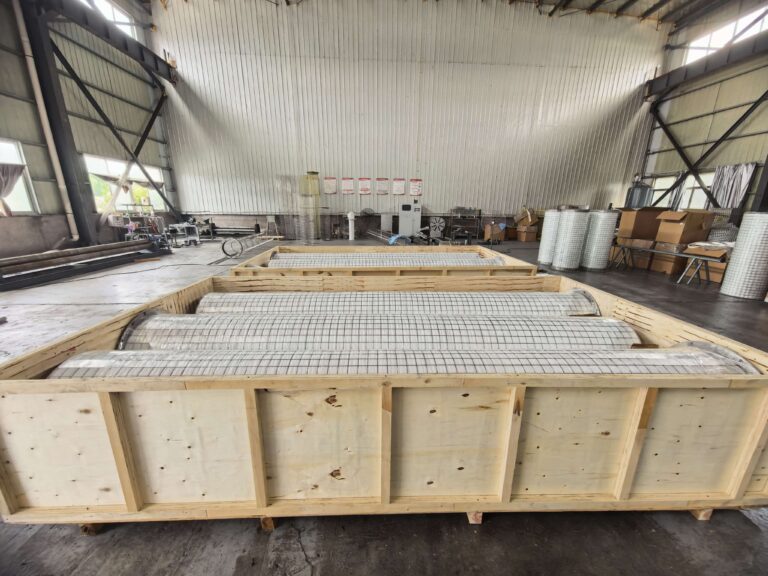
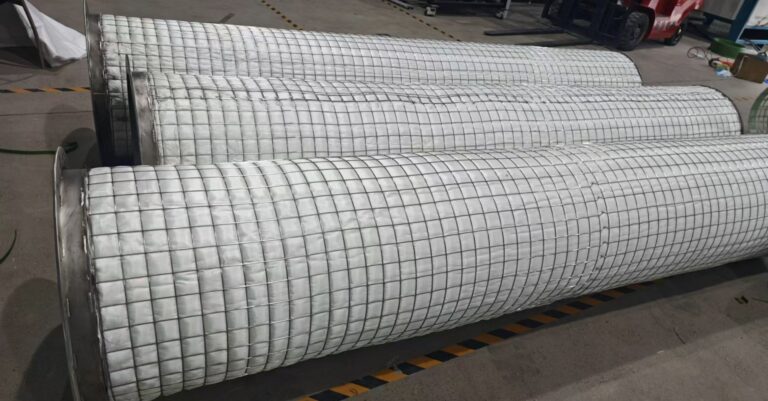
Many Indian plants have existing demister vessels that can be retrofitted with Filtearth fiber bed elements without new vessel procurement. Filtearth designs fiber bed elements to fit existing vessel internal dimensions:
- Element diameter range: 200 to 1,500 mm
- End plate configuration matched to existing vessel
- Nozzle sizes and connection standards (ANSI or IS standards) matched to existing pipe work
No civil modification, no new vessel, no extended shutdown. Element installation during a planned 8-hour maintenance window is standard.
Direct Replacement for Imported Fiber Bed Elements
Several Indian chlor-alkali plants currently operate fiber bed mist eliminators imported from European or American suppliers. When elements reach end of service life — typically after 3 to 5 years — replacement from the original supplier involves:
- 60 to 90 day production lead time
- Full import cost including customs duty and freight
- Foreign exchange exposure on the purchase price
Filtearth supplies performance-matched replacement elements for all major imported fiber bed designs at:
- ~70% of the imported element cost (before duty and freight)
- 30-day production lead time
- Full material certificates and quality documentation in English
- Delivery to Nhava Sheva (Mumbai), Mundra, or Chennai with complete import documentation
Reference Installations Relevant to Indian Buyers
Sulfuric Acid Plant — China (PTFE-free proprietary glass fiber)
Multiple Filtearth fiber bed units in continuous absorption tower service at a 400,000 t/a Chinese sulfuric acid plant — same corrosive environment as Indian chlor-alkali drying tower service. Stable pressure drop and verified emission compliance maintained throughout service life.
Phosphate Fertilizer Plant — Malaysia
Filtearth fiber bed units in phosphoric acid concentrator service — demonstrating established regional supply logistics and 30-day delivery capability to Asian chemical plants.
Drying Tower Retrofit — Kazakhstan
Custom 25 mm fiber bed elements reducing pressure drop from ~1,800 Pa to ~1,200 Pa while maintaining 99.96% efficiency — demonstrating Filtearth’s capability to engineer solutions for constrained operating conditions, directly applicable to Indian plants debottlenecked above original design throughput.
Procurement and Logistics for Indian Buyers
Import Documentation
Filtearth provides complete import documentation for every Indian shipment:
- Commercial invoice with HS code classification
- Packing list
- Certificate of origin (China)
- Material certificates for fiber and shell materials
- Test certificates and quality inspection records
Customs Duty Considerations
Fiber bed mist eliminators for industrial pollution control applications may qualify for concessional customs duty rates under India’s Project Import Regulations or specific exemption notifications for pollution control equipment. Indian buyers should confirm applicable duty treatment with their customs broker before finalizing procurement.
Shipping to Indian Ports
Filtearth works with freight forwarders covering:
- Nhava Sheva (JNPT), Mumbai: Primary port for Gujarat and Maharashtra buyers
- Mundra, Gujarat: Direct access for GIDC Ankleshwar, Bharuch, and Dahej industrial estates
- Chennai (Ennore): For Andhra Pradesh and Tamil Nadu buyers
- Visakhapatnam: For Andhra Pradesh coastal industrial clusters
Transit time from Chinese ports to Indian ports: 12 to 18 days depending on shipping line and routing.
Frequently Asked Questions
Can Filtearth supply chlor-alkali mist eliminators that meet CPCB’s 5 mg/Nm³ acid mist limit? Yes. Filtearth proprietary glass fiber bed mist eliminators consistently achieve outlet acid mist concentrations below 5 mg/Nm³ under design operating conditions — meeting the CPCB limit for new plants and critically polluted areas.
What fiber material is used for chlorine drying tower service? Filtearth uses proprietary glass fiber for chlor-alkali drying tower mist eliminator applications. The fiber provides complete resistance to sulfuric acid at drying tower concentrations and to HCl at the concentrations present in dried chlorine gas, with fine fiber diameter for maximum submicron collection efficiency.
Can Filtearth replace existing imported fiber bed elements in our Indian plant? Yes. Filtearth designs performance-matched replacement elements for existing vessels from all major international suppliers. Provide your vessel internal diameter, element dimensions, and process conditions, and Filtearth will confirm dimensional compatibility and supply a matched replacement element at approximately 70% of the original import cost with a 30-day lead time.
What shell material is used for chlorine service? Standard shell material for chlorine drying tower fiber bed vessels is PP (polypropylene) for ambient to 60°C service or FRP (fiber-reinforced plastic) for larger diameter vessels. For higher temperature or higher pressure applications, SS316L with appropriate lining is specified. Filtearth confirms shell material based on your operating temperature, pressure, and acid concentration.
How long does installation take for a retrofit application? For a single-element retrofit into an existing vessel with prepared pipe work, mechanical installation typically takes 4 to 8 hours during a planned shutdown. Combined with pre-commissioning checks and first-operation verification, the complete installation and commissioning procedure fits within a standard 24-hour planned maintenance window.
Is financing or deferred payment available for Indian buyers? Filtearth’s standard payment terms for Indian buyers are 30% advance with order confirmation and 70% against bill of lading. For larger orders from established Indian chemical companies, extended payment terms may be available on a case-by-case basis. Contact Henry Wang to discuss commercial terms for your specific procurement.
Request a Technical Quotation
If you are evaluating chlor-alkali mist eliminators for a chlorine drying tower application in India — whether for a new installation, a retrofit, or replacement of existing imported elements — Filtearth is ready to provide a detailed technical proposal and commercial quotation within 24 hours.
To receive a quotation, please provide:
- Plant location and production capacity (tonnes/day of chlorine)
- Drying tower gas flow rate (Nm³/h)
- Operating temperature and pressure
- Current mist eliminator type (wire mesh, existing fiber bed, or none)
- Existing vessel internal diameter (for retrofit applications)
- Required delivery port (Nhava Sheva, Mundra, Chennai, or Visakhapatnam)
Contact Henry Wang directly: Email: [email protected] WhatsApp: +86 159 365 10880
Response within 24 hours. Import documentation and customs guidance provided with every Indian order.