Fiber Bed Mist Eliminator vs. Wet Electrostatic Precipitator: Which Technology Is Right for Your Plant?
When submicron acid mist control goes beyond what wire mesh can deliver, engineers face a second decision: fiber bed mist eliminator or wet electrostatic precipitator (WESP)? Both technologies capture submicron liquid aerosols. Both are used in sulfuric acid, chlor-alkali, and chemical processing applications. But they operate on fundamentally different principles, with different capital costs, operating costs, maintenance requirements, and performance characteristics.
Choosing the wrong technology means either overpaying for capability you do not need, or installing equipment that fails to deliver reliable compliance under your specific process conditions.
This article compares fiber bed mist eliminators and wet electrostatic precipitators across eight performance and operational dimensions — with clear guidance on which technology fits which application.
How Each Technology Works
Fiber Bed Mist Eliminator
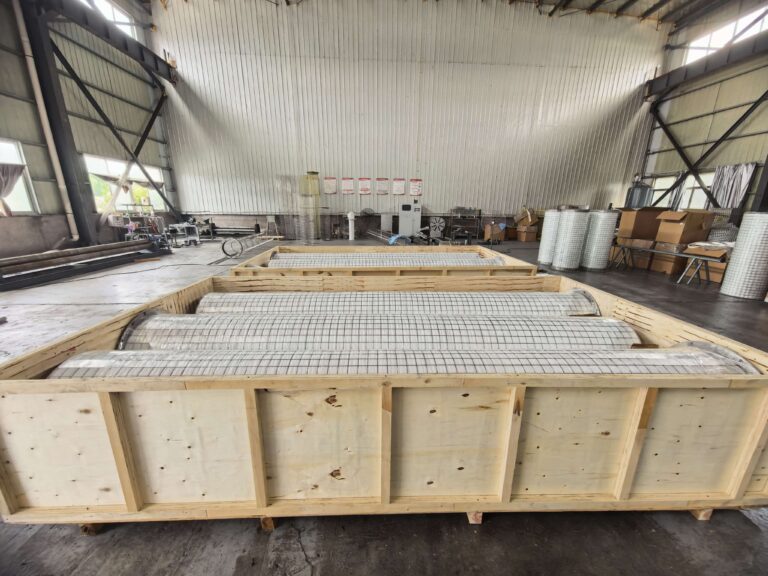
A fiber bed mist eliminator passes contaminated gas through a packed bed of fine-diameter fibers. Liquid droplets are captured through three simultaneous mechanisms: inertial impaction for droplets above 1 micron, direct interception for droplets in the 0.3 to 1 micron range, and Brownian diffusion for submicron particles below 0.3 microns.
Captured droplets coalesce on fiber surfaces, drain by gravity to a collection sump, and are removed continuously. The process is entirely passive — no electrical power is required for the collection mechanism. Gas flow through the fiber bed creates the driving force for all three capture mechanisms.
Wet Electrostatic Precipitator (WESP)
A wet electrostatic precipitator applies a high-voltage electric field — typically 40,000 to 70,000 volts — between discharge electrodes and grounded collection surfaces. Particles passing through the electric field acquire an electrostatic charge and are driven to the grounded collection surface by electrostatic force.
The “wet” designation refers to continuous water washing of the collection surfaces, which removes collected liquid and particulate and prevents re-entrainment. The water washing system creates a continuous liquid flow that must be collected and treated.
Head-to-Head Comparison
Collection Efficiency
Both technologies can achieve high collection efficiency for submicron acid mist under appropriate operating conditions.
Fiber bed mist eliminator: Collection efficiency of 99.96% for liquid aerosols in the 0.1 to 3 micron range under stable operating conditions. Performance is governed by fiber geometry and gas velocity — both stable, predictable variables. Outlet concentrations below 5 mg/Nm³ are standard.
Wet electrostatic precipitator: Collection efficiency of 95 to 99.5% for liquid aerosols under optimal operating conditions. Performance is sensitive to gas composition, temperature, humidity, and electrical resistivity of the collected material. Under conditions that reduce particle charging efficiency — such as high-resistivity aerosols or gas composition variations — WESP collection efficiency can drop significantly below the design value.
Advantage: Fiber bed for consistent, predictable outlet performance across varying process conditions.
Power Consumption
Fiber bed mist eliminator: No electrical power required for the collection mechanism. The only power consumption is the pressure drop across the fiber bed — typically 300 to 800 Pa — which must be overcome by the system blower or fan. For a fiber bed handling 50,000 Nm³/h at 600 Pa pressure drop, the equivalent blower power is approximately 8 to 12 kW.
Wet electrostatic precipitator: High-voltage power supply consumes 0.1 to 0.5 kW per 1,000 Nm³/h of treated gas — plus additional power for the water washing pump system, controls, and instrumentation. For the same 50,000 Nm³/h flow rate, WESP electrical consumption is typically 5 to 25 kW plus auxiliary systems.
Advantage: Fiber bed for lower total power consumption in most industrial applications.
Capital Cost
Fiber bed mist eliminator: Moderate capital cost. The vessel, fiber element, support structure, and drainage system are the primary cost components. For a standard industrial unit handling 20,000 to 50,000 Nm³/h, installed cost is typically USD 30,000 to 150,000 depending on size, pressure rating, and material specification.
Wet electrostatic precipitator: Significantly higher capital cost. The high-voltage power supply, electrode system, water washing infrastructure, wastewater collection and treatment system, and extensive electrical and control infrastructure all add cost. For equivalent gas volume, WESP installed cost is typically two to five times that of a fiber bed mist eliminator.
Advantage: Fiber bed for lower capital cost.
Maintenance Requirements
Fiber bed mist eliminator: Low maintenance during normal operation. Routine maintenance consists of differential pressure monitoring and periodic visual inspection during planned shutdowns. Element replacement every 3 to 5 years is the primary maintenance activity. No moving parts in the collection mechanism.
Wet electrostatic precipitator: Higher maintenance intensity. The high-voltage electrode system requires periodic inspection and cleaning. Electrode alignment must be maintained to prevent electrical shorting. The water washing system requires pump maintenance, nozzle cleaning, and wastewater treatment system operation. Electrical insulator maintenance is critical — contaminated insulators cause electrical faults that reduce collection efficiency.
Advantage: Fiber bed for lower maintenance requirement and simpler operation.
Sensitivity to Process Variations
Fiber bed mist eliminator: Collection efficiency is relatively insensitive to gas composition, temperature, and humidity variations within the design operating range. The three capture mechanisms operate continuously regardless of electrical conditions. Process upsets that change gas flow rate affect face velocity and therefore pressure drop, but collection efficiency remains stable across a wide velocity range.
Wet electrostatic precipitator: Collection efficiency is sensitive to several process variables. Gas temperature affects electrical resistivity of collected material — high resistivity causes back-corona, reducing collection efficiency. Gas humidity affects particle charging. Gas composition changes that alter aerosol electrical properties can significantly reduce WESP performance. In sulfuric acid service, variations in SO₃ concentration affect acid mist resistivity and charging behavior.
Advantage: Fiber bed for stable performance across process variations.
Wastewater Generation
Fiber bed mist eliminator: Collected liquid drains continuously from the fiber bed sump. The collected liquid is the process acid — sulfuric acid, phosphoric acid, amine solution, or other process liquid — which is returned directly to the process circuit. No wastewater is generated. No water is consumed.
Wet electrostatic precipitator: The continuous water washing system generates a wastewater stream containing diluted acid and collected particulate. This wastewater must be collected, pH-adjusted, and treated before discharge or reuse. Water consumption and wastewater treatment add operating cost and complexity that are not present in fiber bed installations.
Advantage: Fiber bed for zero wastewater generation and direct acid recovery.
Handling Solid Particulate
Fiber bed mist eliminator: Standard fiber bed designs are optimized for liquid aerosol capture. Solid particulate accumulates in the fiber structure and cannot drain — progressive solid fouling increases pressure drop and eventually requires element replacement. For gas streams with significant solid loading, a pre-separator upstream of the fiber bed is required.
Wet electrostatic precipitator: WESPs can handle combined liquid mist and solid particulate simultaneously. The water washing system removes both collected liquid and solid deposits from the collection surfaces. For applications where simultaneous mist and dust removal is required without pre-separation, WESP has an operational advantage.
Advantage: WESP for combined mist and solid particulate removal without pre-separation.
Safety and Electrical Hazards
Fiber bed mist eliminator: No electrical hazards in the collection mechanism. Standard chemical process safety procedures apply for work on the vessel and piping. Particularly relevant for flammable gas service — fiber bed mist eliminators can be installed in hydrogen-containing chlorosilane tail gas circuits where high-voltage equipment would create ignition risk.
Wet electrostatic precipitator: High-voltage electrical equipment requires strict electrical safety procedures. Lockout/tagout for the high-voltage system is mandatory before any maintenance access to the collection section. In flammable gas service, WESP installation requires explosion-proof electrical design and additional safety measures.
Advantage: Fiber bed for simpler safety management, particularly in flammable or hydrogen-containing gas service.
Summary Comparison Table
| Performance Dimension | Fiber Bed Mist Eliminator | Wet Electrostatic Precipitator |
|---|---|---|
| Collection efficiency (liquid mist) | 99.96% | 95–99.5% |
| Outlet concentration | < 5 mg/Nm³ | 5–30 mg/Nm³ |
| Power consumption | Low (pressure drop only) | Moderate to high |
| Capital cost | Moderate | High |
| Maintenance intensity | Low | Moderate to high |
| Process sensitivity | Low | Moderate to high |
| Wastewater generation | None | Continuous |
| Solid particulate handling | Pre-separation required | Handles combined mist + solids |
| Electrical safety | Simple | Complex |
| Flammable gas service | Yes | Requires special design |
When to Choose Fiber Bed
Choose a fiber bed mist eliminator when:
- The primary requirement is high-efficiency liquid mist capture (99.96%) at minimum capital and operating cost
- The gas stream is predominantly liquid mist with low or manageable solid loading
- Process conditions vary and consistent performance across the operating range is required
- Zero wastewater generation is preferred — collected acid returned directly to process
- The application involves flammable or hydrogen-containing gas where electrical hazards must be minimized
- Maintenance simplicity and long intervals between major maintenance activities are priorities
- Budget constraints favor lower capital cost with equivalent or superior performance
Typical fiber bed applications: Sulfuric acid absorption and drying towers, chlor-alkali drying tower outlets, amine absorber overheads, phosphoric acid concentrators (with pre-separator for HF/solids service), polysilicon tail gas recovery circuits, semiconductor exhaust treatment.
When to Choose WESP
Choose a wet electrostatic precipitator when:
- The gas stream contains significant solid particulate that must be captured simultaneously with liquid mist, without pre-separation
- Available pressure drop budget is extremely limited (below 200 Pa) and electrical power cost is not a constraint
- The application requires simultaneous removal of submicron particles and liquid mist from a high-temperature gas stream where fiber bed drainage may be problematic
- Existing WESP infrastructure is already installed and incremental capacity addition is more cost-effective than adding fiber bed vessels
Typical WESP applications: High-dust gas streams requiring simultaneous mist and particulate removal, some power generation flue gas applications, specific metallurgical off-gas treatment where combined mist and dust loading exceeds fiber bed pre-separator capability.
Frequently Asked Questions
Can a fiber bed mist eliminator replace an existing WESP in sulfuric acid service? Yes, in most cases. If the existing WESP is being replaced due to electrical reliability issues, high maintenance cost, or inconsistent performance — and the gas stream is predominantly liquid mist with manageable solid loading — a fiber bed mist eliminator is a direct replacement option at lower capital and operating cost. Filtearth can assess your specific application and provide a performance comparison based on your process data.
Which technology achieves lower outlet acid mist concentration? Fiber bed mist eliminators consistently achieve lower outlet concentrations — below 5 mg/Nm³ — than WESPs operating in industrial sulfuric acid service. WESP performance in acid mist service is sensitive to electrical resistivity variations; fiber bed performance is not. For applications requiring outlet concentrations below 5 mg/Nm³ with high reliability, fiber bed technology is the more robust solution.
Is fiber bed technology suitable for very large gas flow rates? Yes. Multiple fiber bed elements in a common vessel, or multiple vessels in parallel, can handle gas flow rates equivalent to large industrial WESPs. Element diameters up to 1,500 mm accommodate high flow rates within compact vessel configurations. Filtearth designs multi-element systems for flow rates from 1,000 to over 200,000 Nm³/h.
What is the total cost of ownership comparison over 10 years? For a typical sulfuric acid plant application, fiber bed total cost of ownership over 10 years — including capital, power, maintenance, and element replacement — is typically 40 to 60% lower than an equivalent WESP. The higher WESP capital cost, continuous power consumption, water and wastewater treatment operating cost, and higher maintenance cost all contribute to a significantly higher total cost of ownership despite similar performance on mist collection efficiency.
Can Filtearth supply both fiber bed mist eliminators and advise on WESP applications? Filtearth specializes in fiber bed mist eliminator technology. We provide objective technical guidance on technology selection based on your specific process conditions — and recommend WESP where it genuinely is the better fit — but our supply capability is fiber bed technology. If your application clearly suits WESP, we will tell you so.
Request a Technology Selection Assessment
If you are evaluating fiber bed mist eliminators versus wet electrostatic precipitators for a sulfuric acid, chlor-alkali, phosphoric acid, or petrochemical application, Filtearth is ready to provide a technology selection assessment and fiber bed quotation within 24 hours.
To receive an assessment, please provide:
- Process gas type and composition
- Gas flow rate (Nm³/h)
- Inlet mist loading (mg/Nm³)
- Solid particulate loading (if present)
- Required outlet concentration (mg/Nm³)
- Available pressure drop budget (Pa)
- Current technology installed (if replacement evaluation)
Contact Henry Wang directly: Email: [email protected] WhatsApp: +86 159 365 10880
Technology selection assessment provided at no cost. Fiber bed quotation within 24 hours.