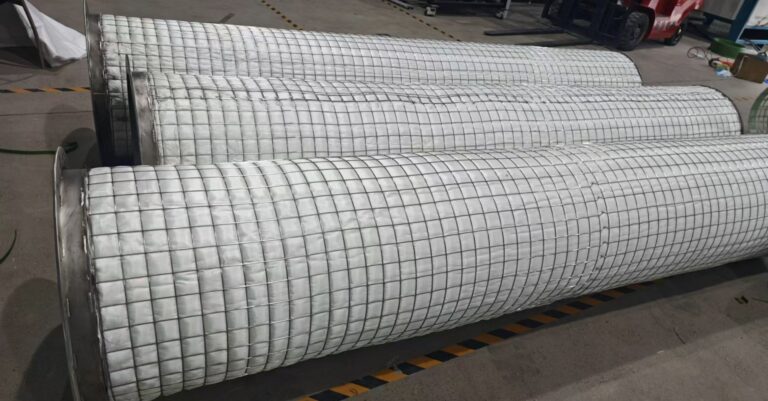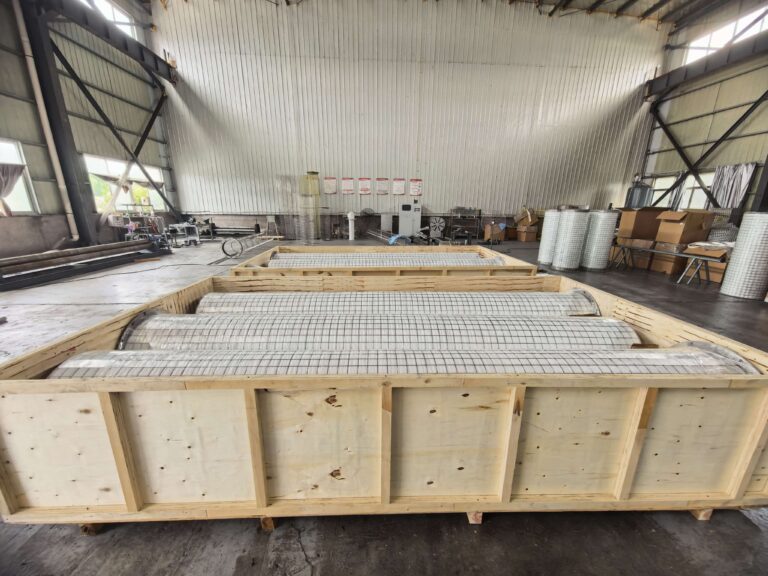

Mist Eliminator for Petrochemical and Natural Gas Processing: Amine Recovery and Contactor Protection
An amine mist eliminator is one of the highest-return investments in natural gas processing — every liter of amine solution recovered directly reduces chemical makeup cost and protects downstream compressors from fouling.
Filtearth designs and manufactures fiber bed mist eliminators for petrochemical and natural gas processing applications — engineered specifically for amine absorber overhead service, glycol dehydration contactors, and hydrocarbon mist separation from process gas streams.
Where Amine Mist Eliminator Technology Matters in Gas Processing
Amine Gas Treating Units
Amine gas treating is the standard process for removing hydrogen sulfide (H₂S) and carbon dioxide (CO₂) from natural gas, refinery off-gas, and syngas streams. The process circulates an aqueous amine solution — typically monoethanolamine (MEA), diethanolamine (DEA), methyldiethanolamine (MDEA), or piperazine-activated MDEA — through an absorber column where it contacts the sour gas and selectively absorbs acid gases.
The treated gas leaving the top of the absorber carries entrained amine solution droplets. These droplets span a wide size range — from large droplets above 10 microns generated by liquid redistribution at the top packing or tray, to fine submicron aerosols formed by evaporation and condensation of amine vapors in the gas phase.
Amine carryover from the absorber overhead causes four distinct problems:
Direct amine loss: Entrained amine droplets leave the absorber with the treated gas and are not recovered. Amine makeup cost is a significant operating expense in high-throughput gas treating units.
Downstream equipment fouling: Amine deposits on compressor internals, heat exchangers, and pipeline walls. Amine fouling in compressors causes vibration, seal degradation, and unplanned maintenance. In pipelines, amine deposits promote corrosion under deposits.
Gas quality degradation: Amine carryover into the sales gas stream violates gas quality specifications. Pipeline operators impose strict limits on amine content in delivered gas — violations result in rejection of gas delivery and commercial penalties.
Environmental discharge: Amine compounds in treated gas that is vented or flared contribute to atmospheric emissions of nitrogen-containing organic compounds, which are subject to increasing regulatory attention.
Glycol Dehydration Units
Glycol dehydration removes water from natural gas to prevent hydrate formation and meet pipeline water dew point specifications. Triethylene glycol (TEG) is the most common dehydration agent, circulated through a contactor column where it absorbs water from the gas stream.
TEG carryover from the dehydration contactor causes problems analogous to amine carryover: direct glycol loss, fouling of downstream equipment, and gas quality specification violations. TEG in the sales gas stream contributes to pipeline corrosion and can cause problems in downstream processing facilities.
Hydrocarbon Mist Separation
Gas-liquid separators, compressor suction scrubbers, and slug catchers in gas gathering and processing facilities remove bulk liquid from gas streams. However, fine hydrocarbon mist — droplets below 5 microns generated by pressure reduction, gas-liquid contact, and condensation — passes through conventional separators and wire mesh pads.
Hydrocarbon mist carryover into gas compressors causes liquid slugging, seal damage, and valve failure. In gas turbine fuel systems, liquid hydrocarbon carryover degrades combustion quality and causes turbine hot section damage. Fiber bed mist elimination downstream of conventional separators provides the final polishing stage required to protect these high-value assets.
Why Wire Mesh Demisters Are Insufficient for Amine Service
Wire mesh demisters are the most common mist elimination device installed in amine absorbers during original plant design. They are simple, inexpensive, and effective for removing large droplets above 5 microns by inertial impaction.
The problem in amine absorber service is that the fine amine aerosol fraction — droplets below 3 microns formed by amine vapor condensation in the cooler gas at the absorber top — passes straight through wire mesh with minimal capture. This fine fraction is responsible for the majority of amine losses measured at the absorber outlet in plants with wire mesh demisters.
Field measurements at gas treating plants with wire mesh demisters typically show amine carryover of 50 to 200 mg/Nm³. Plants that have upgraded to fiber bed mist eliminators report reductions to below 5 mg/Nm³ — a reduction of 95% or more in amine loss rate.
At a large gas treating plant processing 100 million standard cubic feet per day with an amine loss reduction of 100 mg/Nm³, the annual amine makeup cost saving from upgrading to fiber bed mist elimination can exceed the installed cost of the fiber bed unit within the first operating year.
Filtearth Engineering Solution for Amine Absorber Service
Fiber Selection for Amine Service
Amine solutions are alkaline aqueous liquids — the chemical environment is less corrosive than acid mist service but requires fiber materials resistant to the specific amine compound and its degradation products.
Filtearth proprietary glass fiber provides the fiber diameter, surface energy, and chemical compatibility required for efficient amine mist capture:
- Fine fiber diameter (3 to 8 microns) for maximum interception and Brownian diffusion efficiency in the submicron amine aerosol range
- Chemical resistance to MEA, DEA, MDEA, piperazine, and their thermal and oxidative degradation products
- Stable fiber structure under continuous liquid saturation conditions at absorber operating temperature
- Low pressure drop design compatible with absorber overhead hydraulic constraints
Two-Stage Design: Wire Mesh Pre-Separator Plus Fiber Bed
For amine absorbers with high bulk liquid loading — typical of high-pressure absorbers operating at elevated gas velocities — Filtearth recommends a two-stage mist elimination system:
Stage 1 — Wire mesh pre-separator: Removes bulk amine droplets above 5 microns by inertial impaction. Installed immediately above the top packing or tray in the absorber. Handles high liquid loading from liquid redistribution without flooding.
Stage 2 — Fiber bed mist eliminator: Installed in a separate vessel on the absorber overhead line, or in an enlarged absorber top section. Captures the remaining fine amine aerosol below 3 microns to achieve outlet concentrations below 5 mg/Nm³.
This two-stage approach is the industry standard for high-performance amine recovery in gas treating plants where amine loss cost justifies the additional capital investment.
In-Column vs. External Fiber Bed Configuration
In-column installation: A fiber bed element installed directly inside the absorber column, above the top tray or packing bed. Eliminates the need for a separate external vessel. Suitable for new absorbers designed with sufficient column diameter and height to accommodate the fiber bed element and its drainage system.
External vessel installation: A dedicated fiber bed vessel installed on the absorber overhead piping. More common for retrofit applications where the existing absorber column does not have sufficient internal space for a fiber bed element. The external vessel can be designed for the specific flow rate, temperature, and pressure of the overhead gas without the constraints imposed by the absorber column geometry.
Element diameter range: 200–1,500 mm. Both configurations are available in diameters matched to your absorber column or overhead piping dimensions.
Material Specifications for Petrochemical Service
Amine Absorber Service
| Component | Specification | Reason |
|---|---|---|
| Fiber medium | Filtearth proprietary glass fiber (fine grade) | Amine resistance, submicron capture efficiency |
| Inner and outer screens | SS316L | Amine and H₂S resistance |
| Vessel shell | Carbon steel with SS316L internals, or SS316L | H₂S service pressure rating |
| Connection standard | ANSI 150# or 300# | Standard for gas processing plant connections |
| Design pressure | Per ASME Section VIII | High-pressure absorber overhead service |
Glycol Dehydration Service
| Component | Specification | Reason |
|---|---|---|
| Fiber medium | Filtearth proprietary glass fiber | TEG resistance |
| Inner and outer screens | SS316L | Corrosion resistance |
| Vessel shell | Carbon steel or SS316L | Per operating pressure and temperature |
| Connection standard | ANSI 150# or 300# | Standard for dehydration unit connections |
Hydrocarbon Mist Service
| Component | Specification | Reason |
|---|---|---|
| Fiber medium | Filtearth proprietary glass fiber | Hydrocarbon resistance |
| Inner and outer screens | SS316L | General hydrocarbon service |
| Vessel shell | Carbon steel | Standard for hydrocarbon service |
| Design standard | ASME Section VIII, API 12J | Gas processing industry standards |
| Connection standard | ANSI 150# to 900# | Per operating pressure class |
Operating Specifications
| Parameter | Amine Service | Glycol Service | Hydrocarbon Service |
|---|---|---|---|
| Fiber material | Filtearth proprietary glass fiber | Filtearth proprietary glass fiber | Filtearth proprietary glass fiber |
| Collection efficiency | 99.96% | 99.96% | 99.96% |
| Outlet concentration | < 5 mg/Nm³ | < 5 mg/Nm³ | < 5 mg/Nm³ |
| Operating temperature | 40–80°C | 20–60°C | -20°C to 80°C |
| Operating pressure | Up to 100 bar | Up to 100 bar | Up to 150 bar |
| Element diameter range | 200–1,500 mm | 200–1,500 mm | 200–1,500 mm |
Economic Justification: Amine Loss Reduction
The economic case for upgrading from wire mesh to fiber bed mist elimination in amine absorber service is straightforward to calculate.
Example: MDEA Gas Treating Unit
Plant parameters:
- Gas throughput: 50 MMscfd
- Amine concentration: 45% MDEA
- Wire mesh demister outlet amine concentration: 100 mg/Nm³
- Fiber bed mist eliminator outlet amine concentration: 5 mg/Nm³
- MDEA cost: approximately USD 2.00/kg
Annual amine loss reduction:
- Gas volume: 50 MMscfd × 365 days = 18,250 MMscf/year = ~517 million Nm³/year
- Amine loss reduction: 95 mg/Nm³ × 517 million Nm³/year = ~49,000 kg/year
- Annual amine cost saving: 49,000 kg × USD 2.00/kg = ~USD 98,000/year
For a fiber bed mist eliminator with an installed cost in the range of USD 30,000 to 80,000 depending on size and pressure rating, payback period is typically 6 to 12 months based on amine cost saving alone — before accounting for reduced compressor maintenance, extended equipment life, and improved gas quality compliance.
Reference Installations
Sulfuric Acid Plant — China
Filtearth fiber bed mist eliminators are in continuous service at a 400,000 t/a sulfuric acid plant in Taiyuan, China, demonstrating long-term stable performance under demanding corrosive process conditions — the same engineering capability applied to petrochemical fiber bed design.
Phosphate Fertilizer Plant — Malaysia
Filtearth fiber bed mist eliminators supplied for acid mist service at a Malaysian phosphate fertilizer facility, demonstrating established regional supply capability for Southeast Asian petrochemical and process industry customers.
Drying Tower Retrofit — Kazakhstan
Custom-engineered fiber bed elements for a high-velocity drying tower, demonstrating Filtearth’s ability to engineer solutions for non-standard operating conditions — directly applicable to amine absorbers operating at elevated gas velocities above original design intent.
Frequently Asked Questions
What amine types are compatible with Filtearth fiber bed mist eliminators? Filtearth proprietary glass fiber is compatible with all common amine treating solutions including MEA, DEA, MDEA, piperazine-activated MDEA, and diglycolamine (DGA). The fiber specification is confirmed based on your specific amine type, concentration, and operating temperature. Degradation products of thermally stressed or oxidatively degraded amine solutions are also considered in material selection.
Can Filtearth supply fiber bed mist eliminators rated for high-pressure amine absorber service? Yes. Filtearth designs fiber bed mist eliminator vessels to ASME Section VIII Division 1 for pressure ratings up to 150 bar. For high-pressure amine absorbers operating above 50 bar — common in offshore gas processing and high-pressure pipeline gas treating — Filtearth can supply pressure vessels with the required wall thickness, nozzle reinforcement, and post-weld heat treatment. Design pressure and temperature must be specified at the time of enquiry.
How much amine loss reduction can be expected by upgrading from wire mesh to fiber bed? Field experience in gas treating plants shows amine loss reductions of 90 to 97% when upgrading from wire mesh demisters to fiber bed mist eliminators. Plants reporting inlet amine concentrations of 50 to 200 mg/Nm³ at the wire mesh outlet consistently achieve outlet concentrations below 5 mg/Nm³ with properly sized fiber bed units.
Is a pre-separator required upstream of the fiber bed in amine service? A wire mesh pre-separator is recommended when bulk liquid loading at the absorber top is high — typically when gas velocity through the absorber exceeds the design flooding velocity for the top tray or packing. If the absorber already has a wire mesh demister installed, this typically serves as the pre-separator and the fiber bed is installed externally on the overhead line.
What is the service life of the fiber bed element in amine service? In clean amine service with no solid contamination or heat-stable salt accumulation on the fiber, proprietary glass fiber elements typically achieve 3 to 5 years of service life. Plants where amine degradation products accumulate on the fiber surface may see reduced element life. Differential pressure monitoring is the primary indicator of element condition.
Can Filtearth supply mist eliminators for offshore platform gas processing? Yes. Filtearth designs fiber bed mist eliminators for offshore applications, including weight and footprint optimization, high-pressure vessel design, and materials certification to offshore platform specifications. Contact us with your platform specifications and we will assess feasibility and propose an appropriate configuration.
Request a Technical Quotation
If you are evaluating fiber bed mist eliminators for an amine gas treating unit, glycol dehydration contactor, or hydrocarbon mist separation application in the Middle East, Southeast Asia, Latin America, or any other region, Filtearth is ready to provide a detailed technical proposal within 24 hours.
To receive a quotation, please provide:
- Application type (amine absorber, glycol contactor, hydrocarbon separator)
- Amine or glycol type and concentration (for treating unit applications)
- Gas flow rate (MMscfd or Nm³/h)
- Operating temperature and pressure
- Current measured or estimated mist carryover concentration
- Column or vessel internal diameter (for in-column applications)
- Required connection standard and pressure class (ANSI 150# to 900#)
Contact Henry Wang directly: Email: [email protected] WhatsApp: +86 159 365 10880
Response within 24 hours. Preliminary amine loss reduction calculation provided at no cost.