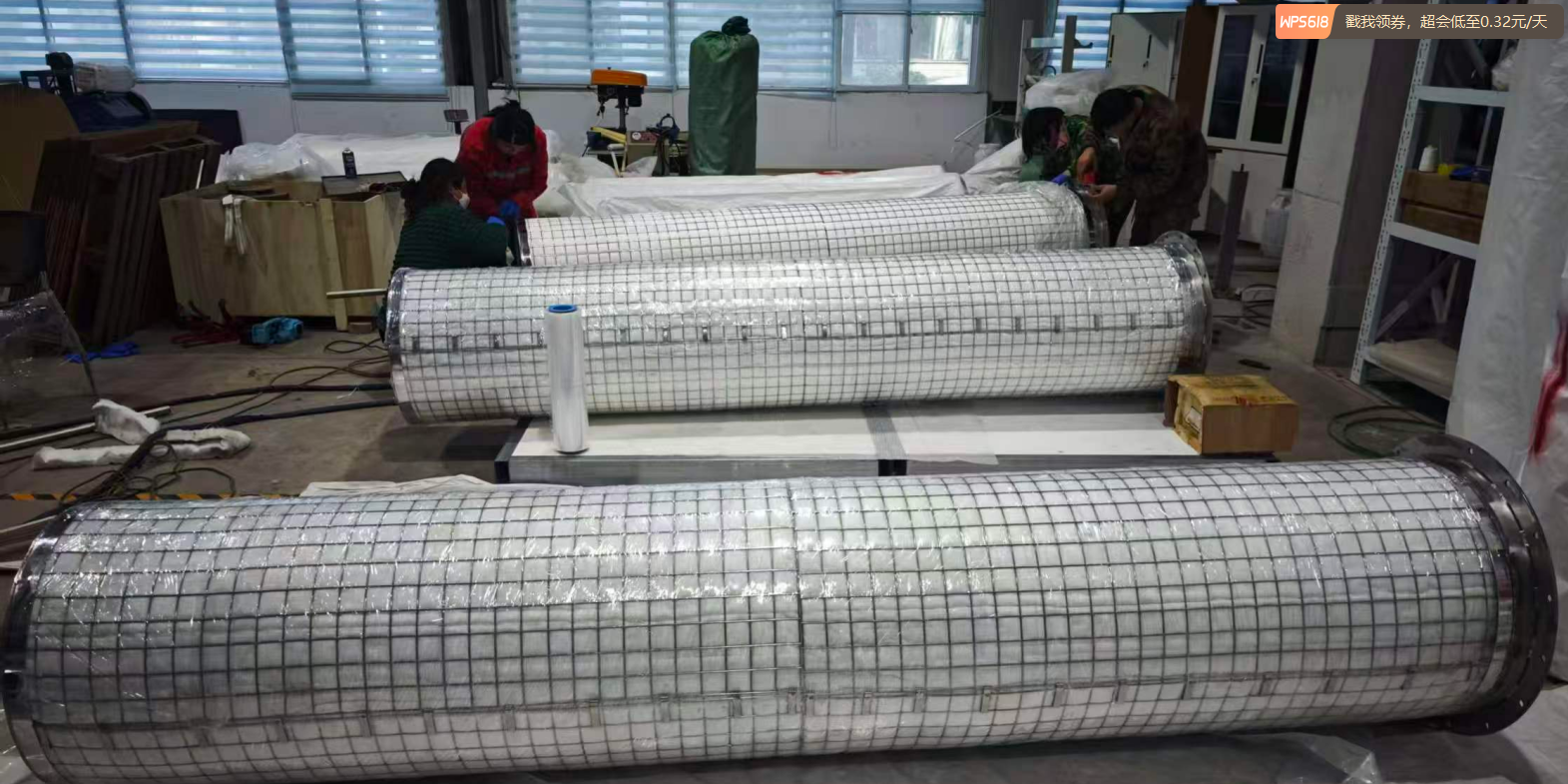
Why Fiber Bed Mist Eliminators Outperform Every Alternative Technology: A Technical Analysis
Most industrial mist elimination decisions are made on price and lead time. The technical reasoning — why one technology captures submicron aerosols at 99.96% efficiency while another fails at 50% — rarely gets examined in detail.
This article changes that. It explains the physics of aerosol capture, why conventional demisters fail below 3 microns, how fiber bed design variables interact to determine performance, and what the field data from real installations actually shows.
If you are specifying mist elimination equipment for a sulfuric acid plant, chlor-alkali facility, polysilicon unit, or phosphoric acid plant — this is the technical foundation you need.
The Core Problem: Why Submicron Mist Is Different
Industrial mist elimination is not a single engineering problem. It is actually three separate problems, each dominant at a different droplet size range.
Most plant engineers understand that wire mesh demisters struggle with fine mist. Fewer understand exactly why — and why the solution requires a fundamentally different approach rather than a better wire mesh.
The answer lies in the physics of how droplets interact with solid surfaces in a flowing gas stream.
Three Capture Mechanisms — and Why All Three Matter
Inertial Impaction: Effective Above 1 Micron
When a gas stream flows around a fiber or wire surface, it curves to follow the obstacle. Droplets with sufficient mass cannot follow this curved path — their inertia carries them forward until they strike the surface and are captured.
The key word is mass. Inertial impaction efficiency increases with droplet size and gas velocity. For droplets above approximately 1 micron, it is highly effective. Wire mesh demisters rely almost entirely on this mechanism.
The problem: droplets below 1 micron have so little mass that their inertia is negligible. They follow the gas streamlines around wire surfaces without making contact. Inertial impaction efficiency for 0.3 micron droplets approaches zero — regardless of mesh thickness or gas velocity.
Direct Interception: Effective from 0.3 to 1 Micron
Droplets in the intermediate size range do not depart from gas streamlines through inertia — but they are large enough that their physical radius brings them into contact with fiber surfaces when a streamline passes close enough.
Collection occurs when the distance between a streamline and the nearest fiber surface is less than or equal to the droplet radius. This mechanism operates independently of droplet density — making it particularly relevant for low-density hydrocarbon aerosols where inertial impaction is further reduced.
Direct interception efficiency depends critically on fiber diameter. Finer fibers — 3 to 15 microns in diameter — present a much higher probability of streamline-fiber proximity for mid-range droplets than wire mesh with wire diameters in the hundreds of microns. This is why fiber bed technology works where wire mesh does not.
Brownian Diffusion: The Only Mechanism Below 0.3 Microns
Submicron droplets below 0.3 microns behave differently from larger particles. They are small enough to be displaced randomly by thermal collisions with gas molecules — a phenomenon called Brownian motion.
A 0.1 micron droplet undergoes approximately ten times the random displacement per unit time as a 1.0 micron droplet. This random motion substantially increases the probability of fiber contact and capture — independent of the gas streamline path.
Critically, Brownian diffusion efficiency increases as gas velocity decreases. Slower gas means longer residence time in the fiber bed, more random displacement cycles, and higher capture probability. This is the opposite of inertial impaction, and it is a critical design consideration that is frequently misunderstood.
The combined action of all three mechanisms is what makes fiber bed technology uniquely capable across the complete 0.1 to 10 micron size range.
Why Wire Mesh and Vane Demisters Cannot Solve the Submicron Problem
This is not a matter of better materials or tighter mesh specifications. It is a fundamental physical limitation.
| Technology | Effective Size Range | Submicron Efficiency | Why It Fails Below 3 μm |
|---|---|---|---|
| Vane-type demister | > 10 μm | < 40% | Relies solely on inertial impaction; large vane spacing misses fine droplets entirely |
| Knitted wire mesh | 3–10 μm | 40–70% | Wire diameter too large for interception; no Brownian diffusion capability |
| Fiber bed mist eliminator | 0.1–10 μm | ≥ 99.96% | All three mechanisms active simultaneously across full size range |
For gas streams containing significant concentrations of submicron acid mist — sulfuric acid absorption towers, chlorine drying systems, polysilicon reactor exhausts — neither vane demisters nor wire mesh pads can achieve the collection efficiencies required for emissions compliance and equipment protection. Fiber bed technology is the only option.
The Five Design Variables That Determine Performance
A fiber bed mist eliminator is not a commodity product. Its performance is determined by the interaction of five interdependent design variables. Getting any one of them wrong degrades overall performance.
1. Fiber Diameter (0.5–25 μm)
Finer fibers increase collection efficiency through both interception and Brownian diffusion — but increase pressure drop at constant packing density. The correct fiber diameter depends on the target droplet size distribution and the system pressure drop budget.
For submicron acid mist service — sulfuric acid absorption towers, chlorine drying systems — fiber diameters of 3 to 8 microns are typically specified. For coarser mist applications, fiber diameters up to 25 microns reduce pressure drop while maintaining adequate efficiency.
2. Packing Density (50–300 kg/m³)
Higher packing density increases fiber surface area per unit volume, improving collection efficiency. It also increases pressure drop and reduces liquid drainage capacity, raising the risk of liquid re-entrainment at high liquid loading.
Packing density must be balanced against the liquid loading of the specific process. A sulfuric acid drying tower with moderate mist loading requires different packing density than a copper smelter absorption tower with high mist loading.
3. Bed Thickness (25–150 mm)
Greater thickness extends gas residence time, enhancing Brownian diffusion efficiency for submicron particles. It also increases pressure drop and requires adequate drainage capacity to prevent liquid accumulation and re-entrainment.
The Kazakhstan retrofit case illustrates a counterintuitive but important principle: at elevated gas velocities, reducing bed thickness from 50 mm to 25 mm — combined with correct fiber specification — maintained 99.96% efficiency while reducing pressure drop from ~1,800 Pa to ~1,200 Pa. Bed thickness alone does not determine efficiency; it must be co-optimised with fiber grade and packing density for the specific operating velocity.
4. Superficial Gas Velocity (0.1–2.5 m/s)
Gas velocity determines which capture mechanism dominates. At low velocity, Brownian diffusion dominates and submicron efficiency is highest. At high velocity, inertial impaction dominates and efficiency for larger droplets improves — but submicron efficiency may decline.
The design velocity must match the target droplet size distribution. For submicron-dominated mist streams, lower face velocity is preferred. For coarser mist with high liquid loading, higher velocity improves drainage.
5. Operating Pressure Drop (490–2,400 Pa)
Pressure drop is the integration of all other design variables: fiber diameter, packing density, bed thickness, and gas velocity. It directly determines blower energy consumption and, where the mist eliminator sits on the compressor suction side, can affect compressor throughput.
Pressure drop must be within the system budget — which is a hard constraint, not a target. The Kazakhstan case demonstrated that exceeding the system pressure drop limit (~1,800 Pa vs 1,450 Pa limit) with a standard design required a complete custom re-engineering of the fiber specification to bring pressure drop within the constraint while maintaining efficiency.
Graded Fiber Bed Architecture: The Engineering Advance That Changes the Efficiency-Pressure Drop Tradeoff
Conventional fiber bed designs use a uniform fiber grade and packing density throughout the bed depth. This is a compromise: the fiber specification must balance inertial impaction efficiency for larger droplets at the bed inlet against Brownian diffusion efficiency for submicron particles deeper in the bed.
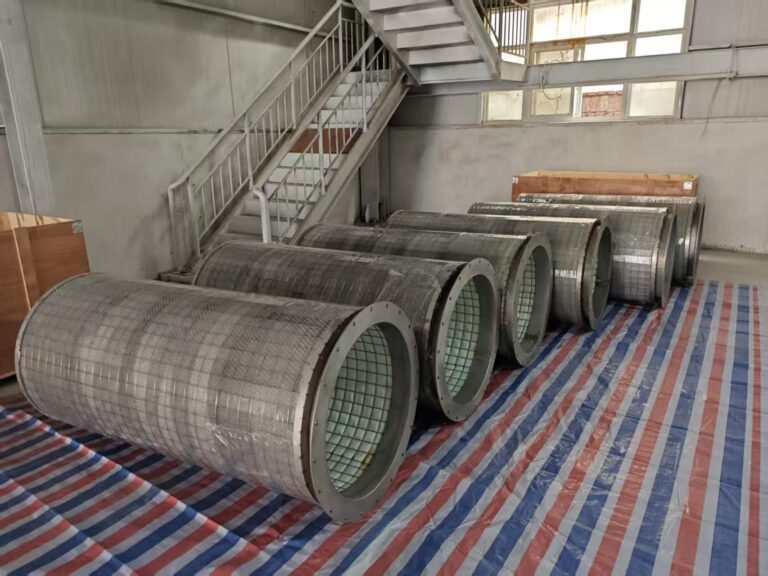
Filtearth’s upgraded fiber bed design uses a graded architecture in which fiber diameter, packing density, and bed porosity vary progressively from the outer screen to the inner screen:
Outer zone (coarser fiber, lower density): Higher gas velocity at the outer screen favours inertial impaction. Coarser fiber with wider spacing captures larger droplets efficiently while allowing gas to decelerate as it penetrates the bed. Liquid drainage from this zone is rapid.
Inner zone (finer fiber, higher density): Gas velocity has decreased by the time it reaches the inner zone. Finer fiber with higher packing density maximises Brownian diffusion efficiency for submicron particles at the lower local velocity.
The result is simultaneous optimisation of both collection mechanisms across the full droplet size range — without the pressure drop penalty of using fine fiber throughout the entire bed depth.
Published performance data indicates that this graded architecture delivers up to 30% greater volumetric processing capacity compared to conventional uniform-density designs of equivalent external dimensions. For capacity-constrained installations where vessel size cannot be increased, this represents a significant engineering advantage.
Field Performance: Two Documented Installations
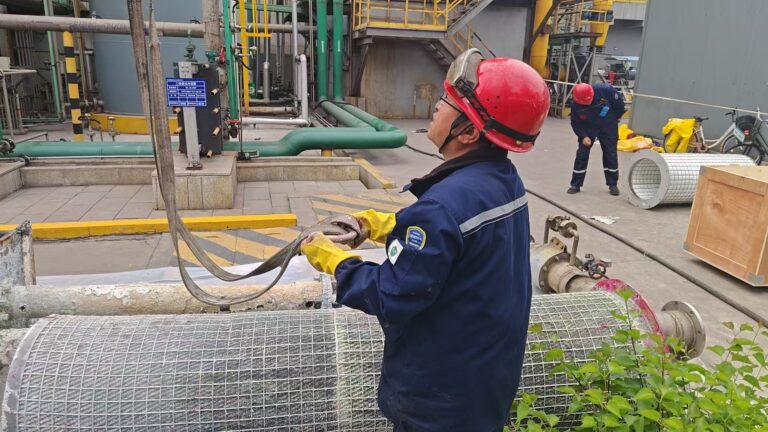
Sulfuric Acid Plant — Taiyuan, Shanxi Province, China (2025)
Complete retrofit of acid mist collectors at the outlet of both the primary and secondary absorption towers in a 400,000 t/a sulfuric acid plant. The operating environment is characterised by high gas temperatures, acid concentrations at or above 98% by weight, and variable mist loadings with tower throughput.
Material specification: PTFE fiber elements in FRP shell, selected for long-term resistance to concentrated sulfuric acid at elevated temperature. Performance: outlet acid mist concentration within national emission limits, verified by stack testing post-commissioning.
Chlor-Alkali Plant — Binzhou, Shandong Province, China (2025)
Retrofit of acid mist collectors at the chlorine gas drying tower outlet in a 300,000 t/a ion-exchange membrane caustic soda plant. The process environment contains highly corrosive chlorine and hydrochloric acid gas mixtures at moderate temperature. Primary requirement: reliable submicron chlorine-bearing droplet removal without excessive pressure drop on the compressor suction side.
Material specification: PTFE fiber elements in PP shell, selected for combined chlorine and HCl resistance. Performance: mist removal efficiency maintained at design specification, compressor inlet mist concentration within equipment protection limits.
Material Selection: The Difference Between a 2-Year and a 10-Year Service Life
Collection efficiency gets most of the attention in fiber bed specification. Material selection determines whether the unit achieves its designed service life — or fails in 18 months.
| Material | Chemical Resistance | Temperature Limit | Recommended Applications |
|---|---|---|---|
| PTFE fiber | Exceptional — virtually all corrosive environments | 180°C | Chlor-alkali, semiconductor, concentrated H₂SO₄, HF service |
| Specialty glass fiber | Excellent for H₂SO₄, phosphoric acid | 250°C | Sulfuric acid absorption towers, phosphoric acid service |
| Polypropylene fiber | Good for dilute acids and alkalis | 80°C | Lower temperature, moderate concentration service |
| SS316L shell | Moderate general corrosion | — | Phosphoric acid, mild acid, organic solvent mist |
| Alloy 20 shell | Concentrated H₂SO₄ purpose-engineered | — | Sulfuric acid drying and absorption towers |
| FRP shell | Strong acids at lower temperatures | — | Strong acid service, ambient to moderate temperature |
| Titanium shell/screens | Excellent Cl₂ and HCl resistance | — | Chlor-alkali, HCl service |
Under correct material selection and appropriate process control, fiber bed elements achieve service lives of 5 to 10 years. At end of life, the vessel shell — which represents the majority of installed capital cost — is retained and refilled with new fiber packing, restoring full design performance at substantially lower cost than complete unit replacement.
Four Technology Trends Shaping the Next Decade
Reduced Pressure Drop Through Graded Bed Design
Energy costs for blowers and compressors in chlor-alkali and sulfuric acid plants are substantial. Reducing fiber bed pressure drop without sacrificing collection efficiency is a primary development objective. Graded bed architectures and optimised flow distribution are the main engineering levers.
Modular Standardised Elements
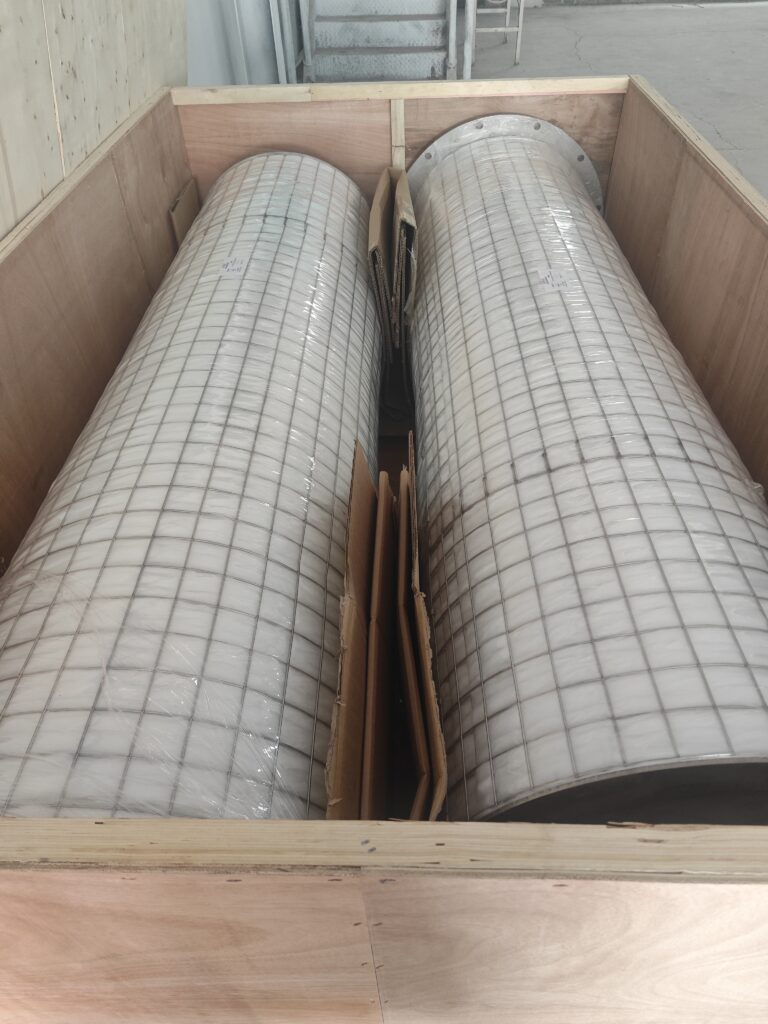
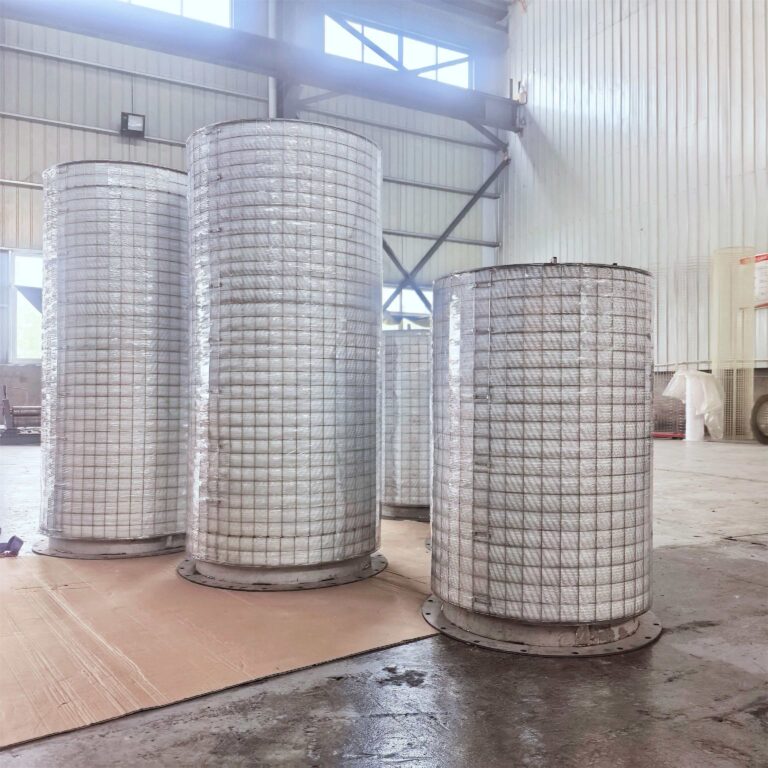
Bespoke project-specific designs have historically meant long lead times and limited spare parts availability. Modular candle element designs built around standardised diameters and connections reduce manufacturing lead time, lower spare parts inventory cost, and simplify field replacement.
Integrated Online Condition Monitoring
Differential pressure transmitters, gas flow meters, and liquid discharge indicators integrated into control systems enable continuous real-time monitoring of element condition. Rising differential pressure provides advance warning of clogging or flooding — shifting maintenance from reactive to predictive.
Fiber Repacking Services
The economic advantage of repacking existing vessels with new fiber — rather than replacing the complete unit — grows as corrosion-resistant alloy vessel costs rise. Specialist repacking capability is an increasingly important part of the fiber bed mist eliminator service offering.
Frequently Asked Questions
What is the difference between a fiber bed mist eliminator and a candle filter? The terms refer to the same technology. “Candle filter” describes the cylindrical geometry of the fiber element — the element resembles a candle in shape. “Fiber bed mist eliminator” describes the function. Both terms are used in the industry, with “fiber bed mist eliminator” more common in the sulfuric acid and chlor-alkali sectors.
Why does Brownian diffusion efficiency increase at lower gas velocity? Lower gas velocity means longer residence time in the fiber bed. Submicron particles experience more random displacement cycles during their passage through the bed, increasing the statistical probability of fiber contact and capture. This is why fiber bed designs for submicron-dominated mist streams use lower face velocity than designs for coarser mist applications.
Can a fiber bed mist eliminator handle both liquid mist and solid particles? Fiber beds are optimised for liquid aerosol capture. Dry particulate can blind the fiber media by preventing droplet drainage and coalescing drainage paths. If the gas stream contains significant solid loading, a cyclone or pre-filter should be installed upstream to remove bulk solids before the gas enters the fiber bed.
What causes fiber bed pressure drop to increase over time? The primary cause is liquid flooding — liquid accumulates in the fiber bed faster than it drains. Secondary causes include fouling by solid particles or fiber degradation. Differential pressure monitoring across the bed provides early warning of both conditions.
How does Filtearth’s graded fiber bed design differ from standard designs? Standard designs use uniform fiber grade and packing density throughout the bed. Filtearth’s graded architecture varies fiber diameter, packing density, and porosity progressively from outer to inner screen — optimising inertial impaction in the outer zone and Brownian diffusion in the inner zone simultaneously. This achieves up to 30% greater volumetric capacity compared to uniform designs of equivalent external dimensions.
Summary
Fiber bed mist eliminators outperform every alternative mist elimination technology in the submicron range because they are the only technology that simultaneously exploits all three aerosol capture mechanisms — inertial impaction, direct interception, and Brownian diffusion — across the complete 0.1 to 10 micron droplet size spectrum.
Performance is determined by five interacting design variables: fiber diameter, packing density, bed thickness, gas velocity, and pressure drop. Optimising these variables for the specific process — rather than selecting from a standard catalog — is the difference between 99.96% efficiency and 50% efficiency.
Filtearth designs and manufactures custom fiber bed mist eliminators for sulfuric acid, chlor-alkali, polysilicon, phosphoric acid, and petrochemical applications. Every unit is engineered from actual process data. ISO 9001 certified manufacturing. 30-day production lead time.
Contact Henry Wang for a technical assessment: Email: [email protected] WhatsApp: +86 159 365 10880