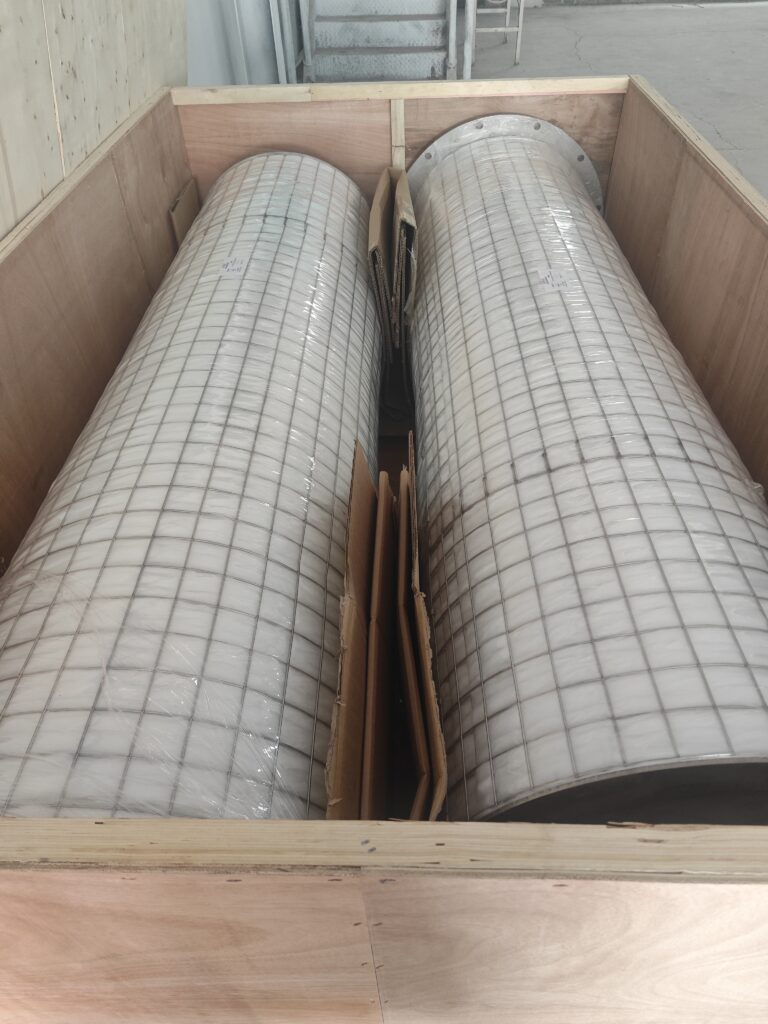
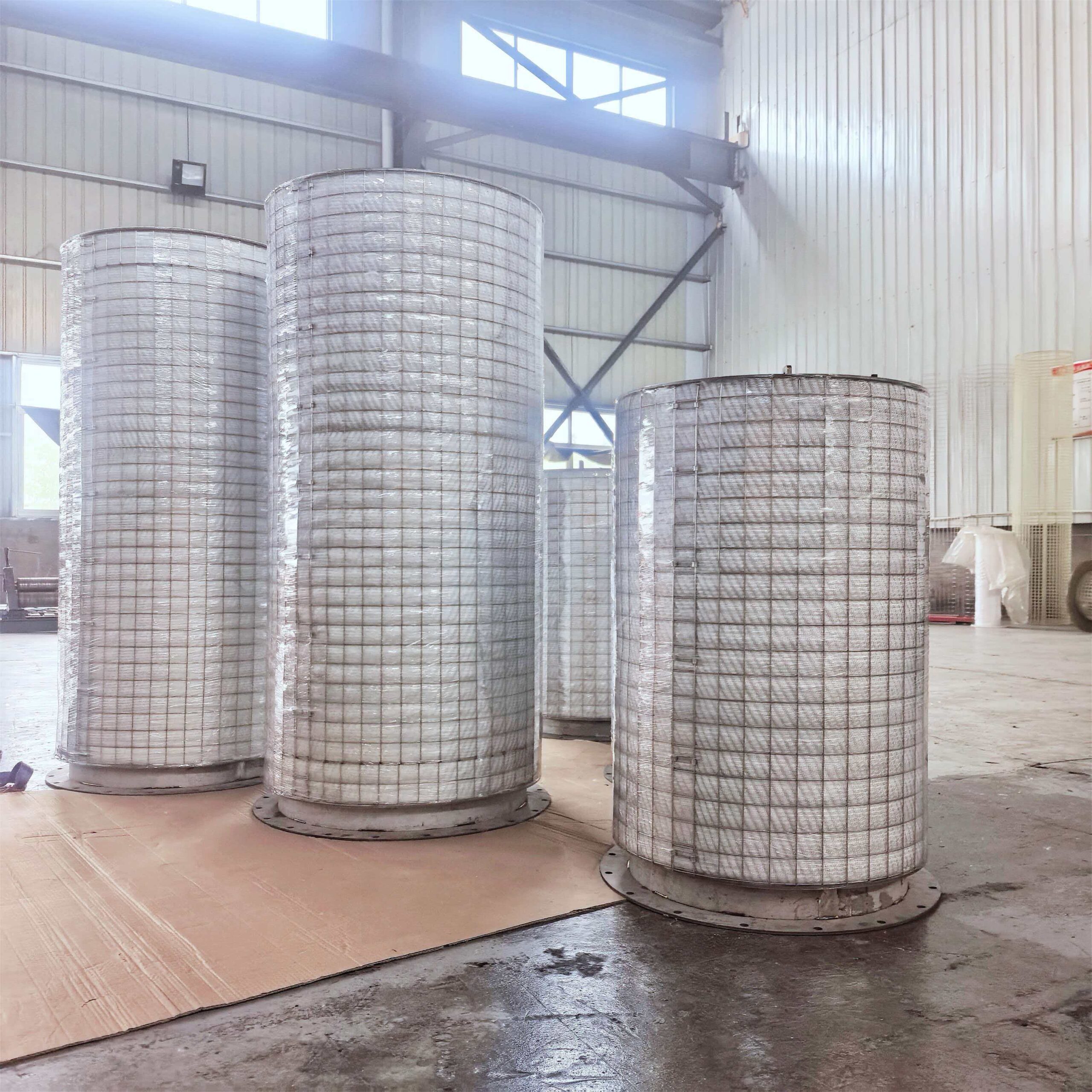
Fiber Bed Mist Eliminator for Copper Smelter Sulfuric Acid Plants in Latin America
Choosing the right copper smelter mist eliminator is one of the most critical decisions for sulfuric acid plants in Latin America — where Chile and Peru together account for nearly 40% of global copper mine production.
The sulfuric acid plants attached to copper smelters in Chile, Peru, and Mexico operate under conditions significantly more demanding than standard contact process sulfuric acid plants. Smelter off-gas contains higher dust loadings, variable SO₂ concentrations, and elevated inlet mist loadings that challenge conventional mist elimination equipment.
For Latin American smelter operators facing tightening SERNAGEOMIN and SEMARNAT emission standards, fiber bed mist eliminators are the only technology capable of reliably meeting acid mist discharge limits — and Filtearth engineers them specifically for metallurgical off-gas service.
Why Copper Smelter Sulfuric Acid Plants Are Different
A standard contact process sulfuric acid plant operates on a consistent feed gas with predictable SO₂ concentration, temperature, and dust loading. Engineering the mist elimination system for these plants is straightforward.
Copper smelter sulfuric acid plants are fundamentally different in three ways.
Higher and Variable Inlet Mist Loading
Smelter off-gas contains entrained copper smelting dust, sulfate particles, and elevated moisture levels from the converter and flash smelting processes. After gas cleaning, the feed gas to the sulfuric acid plant still carries significantly higher mist and particulate loading than standard contact process feed gas. Inlet mist concentrations at the drying tower outlet can reach 300 to 500 mg/Nm³ — two to three times higher than in standard sulfuric acid plants.
This elevated liquid loading requires fiber bed mist eliminators with higher drainage capacity and, in many cases, a wire mesh pre-separator upstream to handle bulk liquid carryover before the fiber bed provides final submicron polishing.
Variable SO₂ Concentration
Converter off-gas SO₂ concentration varies with the smelting cycle — high during the blow phase, lower during the charging and skimming phases. This variability means the sulfuric acid plant operates across a wider range of gas flow rates and compositions than a standard plant. The mist elimination system must perform reliably across this entire operating range, not just at design point.
Elevated Operating Temperature
Smelter off-gas temperatures after gas cleaning and heat recovery are typically higher than in standard contact process plants, requiring fiber bed elements and shell materials rated for continuous service at elevated temperature.
The Emission Compliance Pressure in Latin America
Environmental regulation of copper smelter emissions has tightened significantly across Latin America over the past decade.
Chile — SERNAGEOMIN and Supreme Decree DS 28
Chile’s Supreme Decree DS 28 sets emission limits for sulfuric acid mist from copper smelter stacks. The limits have been progressively tightened, and enforcement by SERNAGEOMIN has intensified as Chile pursues its environmental commitments. New and upgraded smelter sulfuric acid plants are required to meet acid mist stack concentrations well below 30 mg/Nm³.
Standard wire mesh demisters in smelter sulfuric acid service typically achieve outlet concentrations of 50 to 150 mg/Nm³ — above the regulatory threshold. Fiber bed mist eliminators achieving 99.96% removal efficiency consistently deliver outlet concentrations below 5 mg/Nm³, providing a substantial compliance margin.
Peru — OEFA and Environmental Impact Assessments
Peru’s environmental regulator OEFA enforces emission limits set under Environmental Impact Assessments for mining and metallurgical operations. Copper smelters in Peru — including major facilities in Ilo and La Oroya — are under ongoing pressure to reduce sulfur dioxide and acid mist emissions as conditions of their operating permits.
Mexico — SEMARNAT NOM Standards
Mexican environmental standards under SEMARNAT set acid mist emission limits for sulfuric acid plants in the chemical and metallurgical sectors. Fiber bed technology at 99.96% efficiency is the established compliance solution for new and upgraded Mexican sulfuric acid plants.
Engineering Solutions for Smelter Sulfuric Acid Service
Two-Stage Mist Elimination: Wire Mesh + Fiber Bed
For copper smelter sulfuric acid plants with high inlet mist loading, Filtearth recommends a two-stage system:
Stage 1 — Wire Mesh Pre-Separator Installed immediately downstream of the drying tower or absorption tower. Removes bulk liquid droplets above 5 microns. Specified in titanium or high-alloy material for concentrated sulfuric acid resistance. Handles the high liquid loading characteristic of smelter off-gas service without flooding.
Stage 2 — Fiber Bed Mist Eliminator Installed downstream of the wire mesh pre-separator. Captures the remaining submicron acid mist — the fraction below 3 microns that the wire mesh cannot remove — to achieve final outlet concentrations below 5 mg/Nm³.
This two-stage approach protects the fiber bed from flooding under high liquid loading conditions, extends fiber bed element service life, and achieves the combined performance target of 99.96% overall removal efficiency.
Single-Stage Fiber Bed with High-Drainage Design
For plants where inlet mist loading is moderate — typically below 200 mg/Nm³ after the wire mesh pre-separator — a single fiber bed mist eliminator with high-drainage fiber packing provides a simpler and more compact solution. Filtearth designs the fiber packing density and bed thickness to balance collection efficiency against drainage capacity for the specific liquid loading of each installation.
Retrofit into Existing Vessels
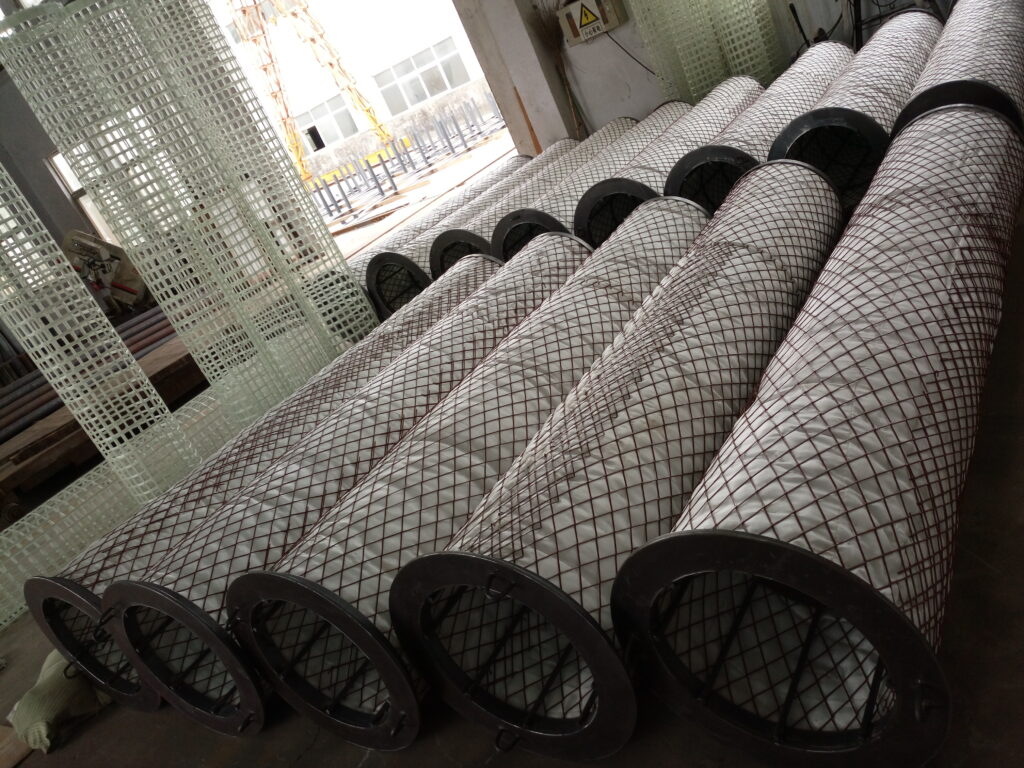
Many Latin American copper smelter sulfuric acid plants operate legacy mist elimination systems installed during original plant construction — often wire mesh pads or early-generation fiber bed units from European suppliers now approaching end of service life. Filtearth designs fiber bed replacement elements matched to existing vessel internals, eliminating the need for new vessel procurement or civil modification.
Element diameter range: 200–1,500 mm. Custom fiber grades, drainage configurations, and shell materials matched to your existing vessel geometry and process conditions.
Material Selection for Smelter Sulfuric Acid Service
Fiber Medium
PTFE fiber is the standard specification for drying tower and absorption tower service in copper smelter sulfuric acid plants. PTFE provides complete chemical resistance to concentrated sulfuric acid at all operating concentrations and temperatures up to 180°C. Fiber diameters of 3 to 15 microns are selected based on the required balance of collection efficiency and pressure drop for the specific operating velocity.
Specialty glass fiber is suitable for intermediate absorption tower service at lower acid concentrations and moderate temperatures, offering a cost-effective alternative where the full chemical resistance of PTFE is not required.
Shell and Support Structure
| Component | Material Options | Selection Basis |
|---|---|---|
| Vessel shell | FRP, PP, SS316L | FRP for large diameter, PP for lower temperature, SS316L for high pressure |
| Inner and outer screens | SS316L, Alloy 20 | Alloy 20 for concentrated H₂SO₄ above 50% |
| End plates and flanges | SS316L, Alloy 20, FRP | Matched to vessel shell material |
| Connection standard | ANSI 150# / 300# | Standard for Latin American projects |
Key Specifications for Smelter Sulfuric Acid Service
| Parameter | Standard Plants | Copper Smelter Plants |
|---|---|---|
| Inlet mist loading | 50–150 mg/Nm³ | 150–500 mg/Nm³ |
| SO₂ concentration | Consistent | Variable — smelting cycle dependent |
| Operating temperature | 50–90°C | Up to 120°C |
| Fiber specification | PTFE or specialty glass | PTFE standard |
| Pre-separator required | Sometimes | Recommended |
| Collection efficiency | 99.96% | 99.96% |
| Outlet concentration | < 5 mg/Nm³ | < 5 mg/Nm³ |
| Element diameter range | 200–1,500 mm | 200–1,500 mm |
Proven Performance: Reference Installations
Sulfuric Acid Drying Tower Retrofit — Kazakhstan
The most technically relevant reference for Latin American smelter operators considering Filtearth is the Kazakhstan drying tower retrofit — a project that demonstrates custom engineering under non-standard operating conditions.
The Kazakhstan installation required replacement of standard 50 mm fiber bed elements with custom 25 mm elements designed for elevated gas velocity conditions. The engineering challenge: maintain 99.96% mist removal efficiency while keeping operating pressure drop below the system limit of 1,450 Pa.
Result: Operating pressure drop reduced from ~1,800 Pa (standard design) to ~1,200 Pa (Filtearth custom design). Mist removal efficiency maintained at 99.96%. Seven units installed, continuous stable operation confirmed.
This project demonstrates the same engineering capability required for copper smelter applications: custom fiber specification, non-standard bed geometry, and performance verification under challenging process conditions.
Sulfuric Acid Plant — China
Multiple fiber bed units in absorption tower service at a major Chinese sulfuric acid production facility. PTFE fiber construction. Continuous operation with stable pressure drop and verified emission compliance.
Phosphate Fertilizer Plant — Malaysia
Fiber bed mist eliminators in phosphoric acid concentrator service. PTFE fiber, HF-resistant construction. Delivered within 30-day production cycle.
Why Latin American Smelter Operators Choose Filtearth
Smelter-specific engineering: Filtearth designs for the actual operating conditions of copper smelter sulfuric acid plants — higher inlet loadings, variable SO₂, elevated temperature — not standard contact process design parameters.
Cost advantage over European suppliers: Filtearth fiber bed mist eliminators are priced at approximately 70% of equivalent European and American brand specifications for the same performance and documentation standard. For capital-intensive smelter projects where multiple units are required, this represents a significant procurement cost reduction.
30-day production lead time: Versus 60 to 90 days for European and American suppliers. For planned smelter turnarounds with fixed schedules, shorter lead time directly reduces project risk.
Full documentation for environmental compliance: Complete material certificates, dimensional inspection records, pressure test reports, and performance verification documentation — supporting SERNAGEOMIN, OEFA, and SEMARNAT audit requirements.
Spanish-language support available: Technical enquiries and quotation requests handled in English or Spanish upon request.
Frequently Asked Questions
Can Filtearth supply fiber bed mist eliminators for copper smelter sulfuric acid plants in Chile? Yes. Filtearth designs and manufactures fiber bed mist eliminators specifically for copper smelter sulfuric acid service, including the higher inlet mist loadings and variable operating conditions characteristic of metallurgical off-gas processing. We supply to Latin American projects and ship to Valparaíso, Antofagasta, and Callao.
Do your units meet SERNAGEOMIN acid mist emission limits? Yes. Filtearth fiber bed mist eliminators consistently achieve outlet acid mist concentrations below 5 mg/Nm³ — well within the limits set under Chile’s Supreme Decree DS 28 for copper smelter sulfuric acid plants.
Is a wire mesh pre-separator always required for smelter applications? Not always, but it is recommended when inlet mist loading exceeds 200 mg/Nm³. The pre-separator protects the fiber bed from liquid flooding under high loading conditions and extends fiber bed element service life. Filtearth assesses the need for pre-separation based on your specific inlet mist loading data.
What fiber material is used for concentrated sulfuric acid service? PTFE fiber is Filtearth’s standard specification for drying tower and absorption tower service in concentrated sulfuric acid applications, including copper smelter plants. Specialty glass fiber is suitable for intermediate absorption service at lower acid concentrations. Material selection is confirmed based on your process acid concentration and operating temperature.
Can Filtearth replace existing European or American fiber bed elements? Yes. Filtearth designs PTFE fiber bed replacement elements matched to existing vessel internal dimensions for retrofit applications. Existing vessel shells are retained. Elements are available in diameters from 200 to 1,500 mm. Provide your vessel drawings or internal dimensions for a matched replacement design.
How do you handle the variable gas flow conditions in smelter off-gas service? Fiber bed mist eliminators are designed for a specific face velocity range. For smelter applications with significant flow rate variation across the smelting cycle, Filtearth designs the fiber bed for the maximum operating flow rate and verifies performance at minimum flow using Brownian diffusion efficiency calculations. Multiple parallel elements can also be used with isolation capability to maintain face velocity within the design range during low-flow periods.
Request a Technical Quotation
If you are evaluating fiber bed mist eliminators for a copper smelter sulfuric acid plant or standard contact process sulfuric acid plant in Chile, Peru, Mexico, Colombia, or anywhere in Latin America, Filtearth is ready to provide a detailed technical proposal within 24 hours.
To receive a quotation, please provide:
- SO₂ source (copper smelter off-gas or elemental sulfur burning)
- Gas flow rate and SO₂ concentration range
- Operating temperature and pressure
- Estimated inlet mist loading
- Vessel connection size and standard (ANSI preferred for Latin America)
- Existing vessel dimensions (for retrofit applications)
Contact Henry Wang directly: Email: [email protected] WhatsApp: +86 159 365 10880
Response within 24 hours. Spanish-language support available on request.