Sulfuric Acid Mist Eliminator: How to Control H₂SO₄ Emissions in Absorption Towers
Sulfuric acid mist is one of the most challenging emission control problems in chemical manufacturing. The droplets are invisible, highly corrosive, and small enough — typically 0.1 to 3 microns — to pass straight through conventional wire mesh demisters without being captured.
The result is acid mist carryover into the tail gas stack, corroded downstream equipment, failed emission inspections, and in some cases, forced production shutdowns.
This guide explains where sulfuric acid mist comes from, why standard demisters fail to control it, and how a properly specified fiber bed mist eliminator solves the problem permanently.
Where Does Sulfuric Acid Mist Come From?
In a double absorption sulfuric acid plant, mist is generated at two primary points.
Drying Tower
Ambient air fed to the sulfur burner contains moisture. This moisture is removed in the drying tower using 93–98% sulfuric acid as the drying agent. The gas-liquid contact causes fine H₂SO₄ droplets to become entrained in the dried gas stream. These droplets are predominantly submicron — small enough to behave like aerosols rather than liquid drops.
Absorption Tower
After the sulfur burner and converter, SO₃ gas is absorbed into 98–99% sulfuric acid in the absorption tower. The exothermic reaction between SO₃ and water vapor produces extremely fine sulfuric acid mist. Droplet sizes here are typically in the 0.1–1 micron range — the most difficult size fraction to capture.
Both towers generate mist that must be controlled before the gas reaches the stack. Regulatory emission limits in most jurisdictions are now below 30 mg/Nm³, with many modern plants targeting below 5 mg/Nm³.
Why Wire Mesh Demisters Fail on Acid Mist
See our full comparison: Fiber Bed vs Wire Mesh Demister →
Wire mesh demisters are widely used in sulfuric acid plants as a first-line separator. They are inexpensive, simple, and effective for removing large droplets above 5–10 microns.
The problem is that the mist generated in sulfuric acid absorption towers is predominantly below 3 microns. At this droplet size, wire mesh capture efficiency drops sharply. Fine droplets follow the gas streamlines through the mesh openings without making contact with the wire surfaces. The result is high mist penetration — often above 50 mg/Nm³ at the stack even with a wire mesh demister installed.
Additionally, wire mesh in concentrated sulfuric acid service is subject to corrosion and fouling. Acid attack on stainless steel wire causes the mesh to degrade over time, further reducing performance and creating maintenance problems.
For sulfuric acid mist control to meet modern emission standards, a fiber bed mist eliminator is required — either as a standalone unit or downstream of a wire mesh pre-separator.
How a Fiber Bed Mist Eliminator Controls Sulfuric Acid Mist
A fiber bed mist eliminator removes submicron acid mist through three simultaneous capture mechanisms operating across the full droplet size range.
Inertial Impaction (Droplets > 1 μm)
Larger droplets have sufficient mass that their inertia prevents them from following the gas flow path around individual fibers. They collide with fiber surfaces and are captured. This mechanism handles the upper end of the acid mist size distribution.
Direct Interception (0.3–1 μm)
Mid-sized droplets follow the gas streamline closely but still make contact with fiber surfaces when the streamline passes within one droplet radius of a fiber. The fiber diameter in a properly designed bed — typically 3 to 15 microns — is selected to maximize interception efficiency for this size range.
Brownian Diffusion (< 0.3 μm)
Submicron droplets below 0.3 microns are subject to Brownian motion — random displacement caused by molecular collisions. This random movement causes these ultra-fine particles to contact fiber surfaces at rates far higher than their trajectory would suggest. Brownian diffusion is the dominant capture mechanism for the finest acid mist fraction.
The combination of these three mechanisms gives fiber bed mist eliminators their characteristic high efficiency: 99.96% removal across the full submicron size range that wire mesh cannot address.
Captured acid droplets coalesce on the fiber surfaces, grow into larger drops, and drain by gravity to the sump at the bottom of the vessel. The drained acid is returned to the absorption system. Clean gas exits through the outlet with acid mist concentration consistently below 5 mg/Nm³.
Material Selection for Sulfuric Acid Service
Sulfuric acid is one of the most chemically aggressive industrial fluids. Material selection for the fiber element, support structure, and vessel shell is critical to achieving the required service life.
Fiber Material
PTFE (Polytetrafluoroethylene) fiber is the standard choice for sulfuric acid mist elimination. PTFE is chemically inert to sulfuric acid at all concentrations from dilute to fuming, and remains stable at operating temperatures up to 180°C. Fiber diameters of 3–15 microns provide the surface area and interception geometry required for submicron capture.
Borosilicate glass fiber is used in lower-concentration acid service (below 75% H₂SO₄) where temperature is moderate. Glass fiber offers excellent efficiency but has limited resistance to highly concentrated or fuming sulfuric acid.
Support Structure
The fiber bed element requires an internal support grid and external retaining screen. For sulfuric acid service, these are fabricated from:
- PP (Polypropylene): Suitable for temperatures below 80°C and concentrations below 80% H₂SO₄
- FRP (Fiber-Reinforced Plastic): Used for larger diameter vessels in moderate acid concentration service
- 316L Stainless Steel with PTFE coating: For high-temperature and high-concentration applications
Vessel Shell
- PP or FRP: Standard for drying tower and first absorption tower applications
- Carbon steel with rubber lining: Used in some legacy installations
- Alloy 20 or Hastelloy C276: Specified for fuming sulfuric acid (oleum) service or temperatures above 120°C
Filtearth engineers material selection based on your specific acid concentration, temperature, gas velocity, and required service life — not a generic catalog recommendation.
Installation Configurations
Standalone Fiber Bed Unit
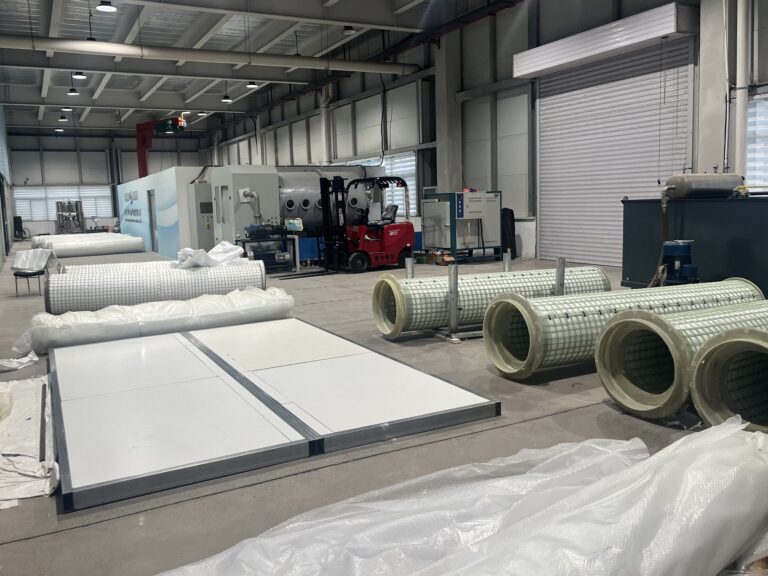
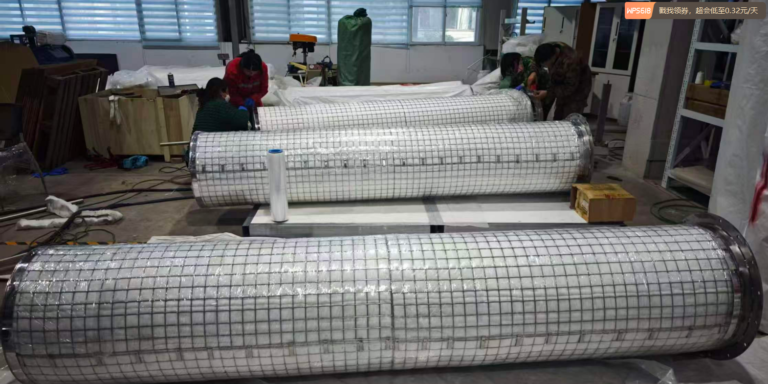
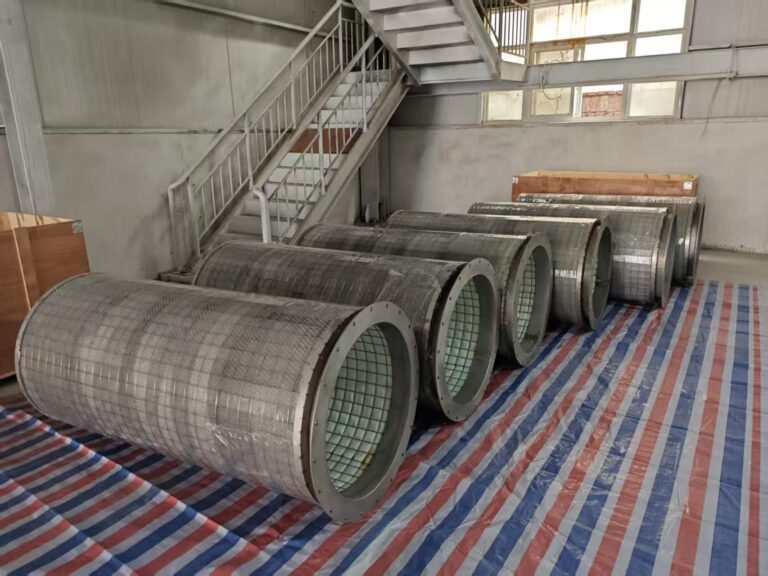
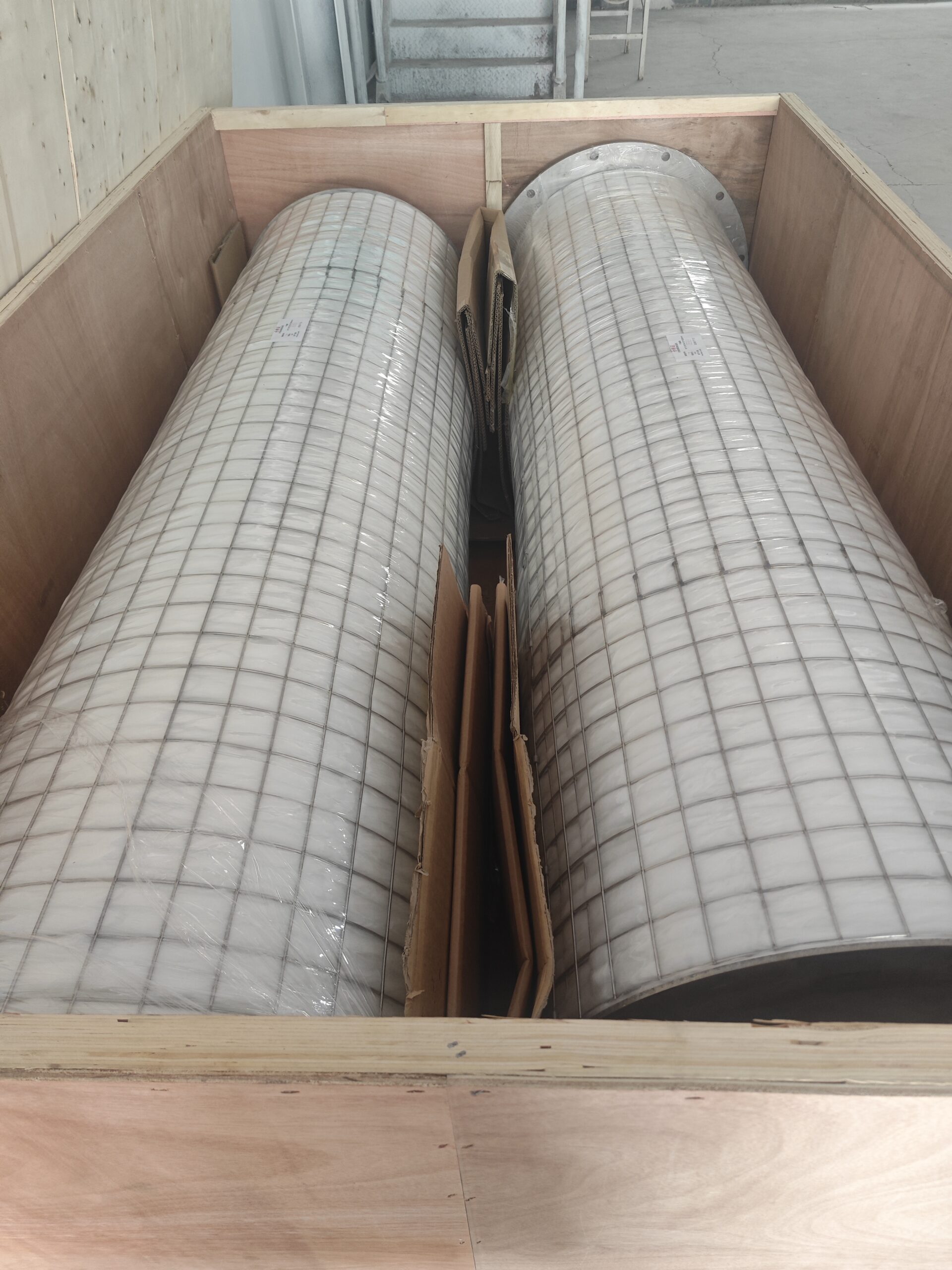
A dedicated fiber bed vessel installed downstream of the absorption tower, before the tail gas stack. The gas enters the shell, flows radially inward through the cylindrical fiber bed element, and exits through the central core. Acid drains to the vessel sump and is returned to the absorption circuit.
This is the standard configuration for new plants or major retrofits where space is available for a separate vessel.
In-Tower Fiber Bed Element
In some existing plants, a fiber bed element can be installed directly inside the absorption tower above the packing bed. This eliminates the need for a separate vessel and reduces piping, but requires careful engineering to ensure proper gas distribution and drainage without interfering with the absorption process.
Two-Stage System: Wire Mesh + Fiber Bed
For gas streams with high bulk liquid loading — for example, after the drying tower where droplet sizes include a significant coarse fraction — a wire mesh pre-separator installed upstream of the fiber bed removes bulk liquid carryover. This protects the fiber bed from flooding and extends element life.
The wire mesh handles droplets above 5 microns. The fiber bed polishes the remaining submicron mist to below 5 mg/Nm³.
Key Specifications for Sulfuric Acid Mist Eliminators
When sizing a fiber bed mist eliminator for sulfuric acid service, the following process data is required:
| Parameter | Typical Range | Why It Matters |
|---|---|---|
| Gas flow rate | 1,000–100,000 Nm³/h | Determines vessel diameter and element size |
| Operating temperature | 50–120°C | Controls fiber and shell material selection |
| Acid concentration | 93–99% H₂SO₄ | Drives material compatibility requirements |
| Inlet mist loading | 50–500 mg/Nm³ | Sets liquid drainage design requirements |
| Required outlet concentration | < 5–30 mg/Nm³ | Determines fiber grade and bed thickness |
| Operating pressure | Near atmospheric to 50 kPa | Affects vessel design and pressure rating |
Submitting complete process data allows accurate sizing and material selection. Undersized units experience high pressure drop and liquid flooding; oversized units have insufficient face velocity for efficient submicron capture.
Performance Benchmarks
Properly specified and installed Filtearth fiber bed mist eliminators in sulfuric acid service achieve:
- Outlet acid mist concentration: < 5 mg/Nm³ (often < 2 mg/Nm³ under design conditions)
- Collection efficiency: 99.96% for droplets 0.1–3 μm
- Pressure drop: 200–600 Pa (stable over service life)
- Service life: 3–5 years for PTFE fiber elements in clean acid service
- Temperature range: Up to 180°C (PTFE fiber) or 260°C (ceramic fiber, high-temperature series)
Regulatory Context
Emission standards for sulfuric acid plants vary by region, but the trend globally is toward tighter limits:
- China (GB 26132-2010): Acid mist ≤ 30 mg/Nm³ for existing plants; ≤ 5 mg/Nm³ for new plants in key emission control zones
- European Union (Industrial Emissions Directive): Typically ≤ 5–10 mg/Nm³ for new installations
- India (Environment Protection Rules): Acid mist ≤ 50 mg/Nm³ for existing plants, moving toward tighter limits in new installations
- Middle East: Most Gulf Cooperation Council countries apply standards equivalent to European levels for new plants
Wire mesh demisters cannot reliably meet these limits. Fiber bed technology is the industry-standard solution for compliance in modern and upgraded sulfuric acid plants.
Frequently Asked Questions
Can a fiber bed mist eliminator handle fuming sulfuric acid (oleum)? Yes, with appropriate material selection. Oleum service requires PTFE fiber, PTFE-lined support structures, and an alloy or PTFE-lined vessel shell. Filtearth manufactures units for oleum concentrations up to 65% free SO₃. Process data including free SO₃ concentration and temperature must be provided for accurate material specification.
How often does the fiber bed element need replacement in acid service? In clean sulfuric acid mist service with no solid contamination, PTFE fiber elements typically achieve 3 to 5 years of service life. If the gas stream contains catalyst dust or other solids from the converter, element life may be shorter. A pre-filter or cyclone upstream is recommended in high-dust applications.
What causes fiber bed pressure drop to increase over time? The primary cause is liquid flooding — liquid accumulates in the fiber bed faster than it drains. This is usually caused by undersized drainage, a blocked drain line, or liquid loading higher than the design basis. Secondary causes include fouling by solid particles or degradation of the fiber element. Differential pressure monitoring is essential for early detection.
Can the acid drained from the fiber bed be returned to the absorption circuit? Yes. The acid collected in the sump is clean concentrated sulfuric acid that can be returned directly to the absorption acid circulation system. The drainage rate is typically small relative to the acid circulation volume and does not affect acid concentration balance significantly.
Does Filtearth provide on-site commissioning support? Filtearth provides complete installation documentation and remote commissioning guidance for all deliveries. For large or complex installations, on-site commissioning support can be arranged. Contact us to discuss the support package appropriate for your project.
Summary
Sulfuric acid mist control is not optional — it is a regulatory requirement, an equipment protection necessity, and a worker safety issue. Wire mesh demisters are inadequate for the submicron mist generated in modern sulfuric acid absorption towers.
Fiber bed mist eliminators with PTFE fiber construction, properly sized for your gas flow and acid concentration, consistently achieve outlet concentrations below 5 mg/Nm³ and collection efficiency of 99.96%. They are the industry-standard solution for sulfuric acid mist elimination worldwide.
Filtearth — Henan Filtearth Environmental Protection Technology Co., Ltd. — specializes in fiber bed mist eliminators for sulfuric acid plants. We engineer each unit from your actual process data and manufacture in our ISO 9001 certified facility in Henan, China.
Have a sulfuric acid mist control challenge? Send your process data to Henry Wang at [email protected] or WhatsApp +86 159 365 10880 for a custom engineering recommendation within 24 hours.