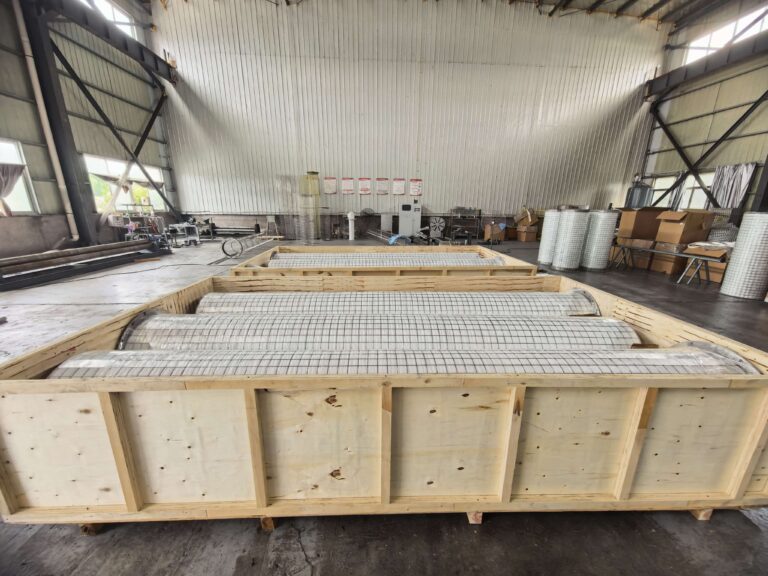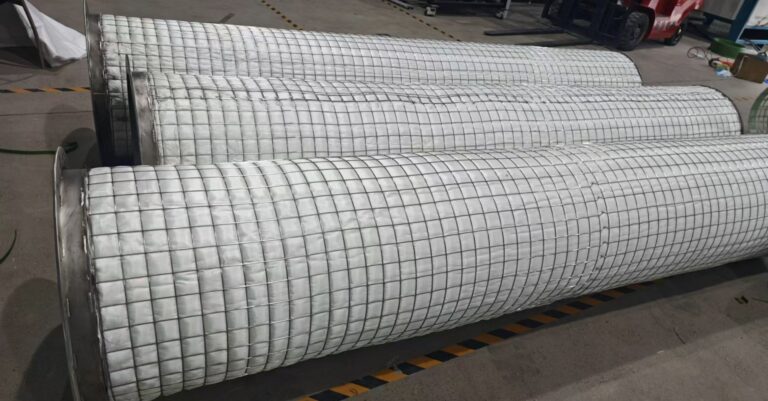
Fiber Bed Mist Eliminator Replacement Elements and Repacking Services
Most fiber bed mist eliminator vessels are designed to last 20 to 30 years. The fiber element inside them lasts 3 to 5 years. When the element reaches end of service life, the choice is straightforward: replace the fiber element and restore full performance, or replace the entire unit at three to five times the cost.
Filtearth supplies direct replacement fiber bed elements and repacking services for existing mist eliminator installations worldwide — matching your vessel dimensions, fiber specification, and performance requirements exactly, regardless of the original equipment manufacturer.
When Does a Fiber Bed Element Need Replacement?
Fiber bed mist eliminator elements do not fail suddenly. They degrade gradually, and the signs are measurable if you know what to look for.
Rising Differential Pressure
The most reliable indicator of element condition is differential pressure across the fiber bed. A new, clean element operates at its design pressure drop — typically 200 to 800 Pa depending on fiber grade and gas velocity. As the element ages, two things cause differential pressure to rise:
Liquid accumulation: If drainage is partially restricted — by a partially closed drain valve, a high drain line, or a liquid seal in the drain piping — liquid accumulates in the fiber bed faster than it drains. The saturated fiber bed creates higher resistance to gas flow, raising differential pressure progressively.
Solid fouling: In processes with solid carryover — phosphoric acid plants, copper smelter sulfuric acid plants, fluidized bed polysilicon reactors — fine particles accumulate in the fiber structure over time. Unlike liquid accumulation, solid fouling cannot be reversed by restoring drainage. It requires element replacement or, in some cases, in-situ washing if the element design permits.
Declining Mist Removal Performance
The second indicator is rising mist concentration at the fiber bed outlet, detected by periodic stack testing or continuous monitoring. Performance decline occurs through three mechanisms:
Fiber migration: Over extended service, fine fibers can migrate within the bed structure, creating low-density channels where gas bypasses the high-efficiency fiber zones. Channeling allows mist to pass through without contacting fiber surfaces, reducing overall collection efficiency.
Chemical degradation: In aggressive chemical environments — concentrated sulfuric acid at elevated temperature, HF-containing streams — fiber surfaces gradually degrade. Chemical degradation reduces the surface energy that promotes droplet adhesion, lowering collection efficiency even when fiber structure appears intact.
Mechanical damage: High gas velocities, pressure surges, or liquid slugging can physically damage fiber packing — compressing it unevenly, creating gaps, or separating fiber from support screens. Mechanical damage reduces effective fiber bed area and creates bypass paths.
Service Life Guidelines by Application
| Application | Typical Element Service Life |
|---|---|
| Sulfuric acid absorption tower | 3–5 years |
| Chlorine drying tower (chlor-alkali) | 3–5 years |
| Phosphoric acid concentrator | 2–4 years |
| Phosphoric acid reactor vent (high solids) | 1–2 years |
| Amine absorber overhead | 3–5 years |
| Polysilicon tail gas | 3–5 years |
| Copper smelter sulfuric acid | 2–3 years |
These are guidelines — actual service life depends on operating conditions, inlet loading, and maintenance practices. Differential pressure monitoring is the most reliable method for determining actual replacement timing.
Filtearth Replacement Element Supply
Direct Dimensional Matching
Filtearth manufactures replacement fiber bed elements matched to your existing vessel internal dimensions — regardless of who originally supplied the vessel and element.
To supply a matched replacement element, Filtearth requires:
- Vessel internal diameter (ID) and tangent-to-tangent length
- Inner screen diameter and outer screen diameter
- Top and bottom end plate configuration (fixed, removable, flanged)
- Current fiber specification (if known) or original supplier reference
- Process conditions (gas composition, temperature, pressure, flow rate)
If vessel drawings are not available, key dimensions can be measured during a planned shutdown and submitted to Filtearth for element design. Our engineers will confirm dimensional compatibility before manufacturing begins.
Element Diameter Range
Filtearth manufactures replacement fiber bed elements from 200 mm to 1,500 mm internal diameter. Standard element lengths from 500 mm to 3,000 mm. Custom dimensions outside this range are available on request.
Fiber Specification Matching and Upgrading
When supplying a replacement element, Filtearth does not simply replicate the original fiber specification. We review the original design against your current operating conditions — which may have changed since the original installation — and recommend the optimal fiber grade for current service.
In many cases, plants have modified their operating throughput, changed process chemistry, or tightened emission limits since the original mist eliminator was installed. A replacement element specified for current conditions may outperform the original design.
Available fiber specifications:
- Filtearth proprietary glass fiber — standard grade for sulfuric acid, chlor-alkali, amine, and hydrocarbon service
- Filtearth proprietary glass fiber — fine grade for polysilicon and high-efficiency submicron service
- Filtearth proprietary carbon fiber — for HF-containing service (phosphoric acid reactor and flash cooler applications)
- Coarse fiber grades — for high-solids-loading service requiring enhanced drainage and fouling resistance
Material Upgrade Options
Replacement is also an opportunity to upgrade materials that have shown inadequate corrosion resistance in service. Common upgrades include:
- Inner and outer screen material upgrade from carbon steel to SS316L or Alloy 20
- End plate material change for improved corrosion resistance
- Shell nozzle lining for drain and vent connections
Repacking Services
For plants where the original fiber element uses a repacking design — in which the fiber packing is separate from the support screens and can be replaced independently — Filtearth offers fiber repacking as an alternative to full element replacement.
What Is Repacking?
Repacking involves removing the degraded fiber packing from the existing support screen structure, cleaning the screens and end plates, and installing new fiber packing to the original or upgraded specification. The support screens, end plates, and flanges are retained and reused.
Repacking reduces replacement cost by 40 to 60% compared to full element replacement when the support structure is in good condition. It is the standard maintenance approach for large-diameter elements where the support screens represent a significant fraction of element material cost.
Repacking Suitability Assessment
Not all fiber bed elements are designed for repacking. Before recommending repacking, Filtearth assesses:
- Support screen condition (corrosion, deformation, wire integrity)
- End plate condition and seal surface integrity
- Flange condition and gasket seating surface
- Fiber retention system design
If the support structure shows significant corrosion damage or deformation, full element replacement is more cost-effective than repacking a compromised structure.
Replacing Imported Brand Elements with Filtearth
Many chemical plants worldwide currently operate fiber bed mist eliminators originally supplied by major European or American manufacturers. When elements reach end of service life, the default has been to reorder from the original supplier — at full import cost and 60 to 90 day lead time.
Filtearth provides performance-matched replacement elements for existing installations at approximately 70% of the cost of original imported elements, with a 30-day production lead time.
How Dimensional Matching Works
Filtearth engineers review your vessel drawings or measured dimensions and design a replacement element with:
- Identical outer diameter to fit existing vessel shell
- Matched inner screen diameter for gas outlet connection
- Matched end plate dimensions and sealing configuration
- Equivalent or upgraded fiber specification for current operating conditions
- Matched flange connections (ANSI, DIN, or JIS as originally installed)
The replacement element installs in your existing vessel without modification. No civil work, no new vessel procurement, no extended shutdown.
Documentation for Replacement Orders
Filtearth provides full quality documentation with every replacement element:
- Fiber material certificate with specification confirmation
- Screen material mill certificates
- Dimensional inspection report confirming as-built dimensions
- Pressure test record (where applicable)
- Performance specification sheet confirming fiber grade and design efficiency
Planning a Replacement: What to Prepare
During Operation (Before Shutdown)
- Record current differential pressure across the fiber bed
- Note any changes in differential pressure trend over the past 6 to 12 months
- Check drain flow rate — reduced drain flow may indicate drainage restriction
- Review any available stack test data for outlet mist concentration
During Shutdown (Element Inspection)
- Measure vessel internal diameter and element dimensions
- Inspect support screens for corrosion, deformation, and wire damage
- Inspect fiber packing for discoloration, compression, and channeling
- Check drain nozzle and piping for blockage
- Photograph element condition for Filtearth engineering review
Information Required for Quotation
Submit the following to receive a replacement element quotation within 24 hours:
- Vessel internal diameter (mm)
- Element outer diameter and inner diameter (mm)
- Element length (tangent to tangent, mm)
- End plate configuration (fixed/removable, flange size and rating)
- Process gas type (sulfuric acid, chlor-alkali, amine, phosphoric acid, hydrocarbon)
- Operating temperature and pressure
- Current differential pressure and target differential pressure
- Required delivery date
Maintenance Best Practices to Extend Element Life
Proper maintenance significantly extends fiber bed element service life. The following practices are recommended for all fiber bed mist eliminator installations.
Differential Pressure Monitoring
Install differential pressure gauges or transmitters across the fiber bed inlet and outlet. Record differential pressure weekly during normal operation. A rising trend of more than 10% above baseline over 30 days warrants investigation of drainage condition and inlet loading.
Drain Line Management
Ensure the drain line from the fiber bed sump remains open and free-draining at all times. A liquid seal in the drain line causes back-pressure on the fiber bed sump, reducing drainage rate and accelerating liquid flooding. Inspect drain line routing for siphon points or low spots that create liquid seals.
Inlet Loading Control
If the process generates periodic high mist loading — for example, during startup after shutdown, or during process upsets — consider installing a wire mesh pre-separator upstream of the fiber bed to handle peak liquid loading events. Protecting the fiber bed from flooding during upset conditions significantly extends element service life.
Shutdown Procedures
During planned shutdowns, drain the fiber bed sump completely before opening the vessel. Allow the fiber bed to drain by gravity for at least 30 minutes after shutting down the gas flow before opening inspection ports. For chlorosilane or HCl service, purge with dry nitrogen before opening to prevent moisture contact.
Frequently Asked Questions
Can Filtearth supply replacement elements for any existing fiber bed mist eliminator vessel? Yes, provided the vessel internal dimensions and process conditions are within Filtearth’s manufacturing range (200 to 1,500 mm element diameter). We design replacement elements to fit existing vessels regardless of the original equipment manufacturer. Vessel drawings or measured dimensions are required to confirm dimensional compatibility.
How long does it take to receive a replacement element from Filtearth? Standard production lead time is 30 days from order confirmation for replacement elements up to 1,500 mm diameter. For urgent replacement requirements — unplanned shutdowns or emergency element failures — contact us directly to discuss expedited production scheduling.
How much does a Filtearth replacement element cost compared to the original supplier? Filtearth replacement elements are priced at approximately 70% of the equivalent original supplier cost for the same fiber specification and documentation standard. The cost advantage reflects our manufacturing cost structure, not a reduction in material quality or performance.
Is repacking always cheaper than full element replacement? Repacking is typically 40 to 60% cheaper than full element replacement when the support screen structure is in good condition. If screens show significant corrosion damage, full element replacement is more cost-effective. Filtearth assesses support structure condition before recommending repacking vs. full replacement.
What fiber material should I specify for my replacement element? The appropriate fiber material depends on your process chemistry. Filtearth proprietary glass fiber is standard for sulfuric acid, chlor-alkali, amine, and hydrocarbon service. Filtearth proprietary carbon fiber is specified for HF-containing service such as phosphoric acid reactor and flash cooler applications. Submit your process conditions and we will confirm the correct fiber specification.
Can I upgrade the fiber specification when replacing my element? Yes. Replacement is an opportunity to upgrade to a fiber grade better suited to your current operating conditions — particularly if your process throughput, chemistry, or emission limits have changed since the original installation. Filtearth reviews your current operating data and recommends the optimal fiber specification for the replacement element.
Request a Replacement Element Quotation
If your fiber bed mist eliminator element is approaching end of service life — or if you are looking to replace imported elements at lower cost and shorter lead time — Filtearth is ready to provide a detailed quotation within 24 hours.
To receive a quotation, please provide:
- Vessel internal diameter and element dimensions
- Process gas type and operating conditions
- Current differential pressure reading
- Required delivery date
- Original supplier reference (if available)
Contact Henry Wang directly: Email: [email protected] WhatsApp: +86 159 365 10880
Response within 24 hours. Dimensional compatibility confirmed before production begins.