Phosphoric Acid Mist Eliminator for Latin America: Solving HF and Solids Challenges in Fertilizer Plants
Phosphoric acid mist eliminator selection in Latin American fertilizer plants is one of the most technically demanding procurement decisions in the regional chemical industry. Mexico, Colombia, Brazil, and Peru operate significant wet process phosphoric acid production capacity supplying diammonium phosphate (DAP), monoammonium phosphate (MAP), and triple superphosphate (TSP) to Latin America’s large agricultural sector.
The gas streams leaving phosphoric acid reactors, flash coolers, and concentrator evaporators in these plants combine three corrosive challenges simultaneously: phosphoric acid mist (H₃PO₄), hydrofluoric acid vapor (HF), and suspended silica and gypsum particles. This combination defeats standard mist elimination technology — and demands a specifically engineered solution.
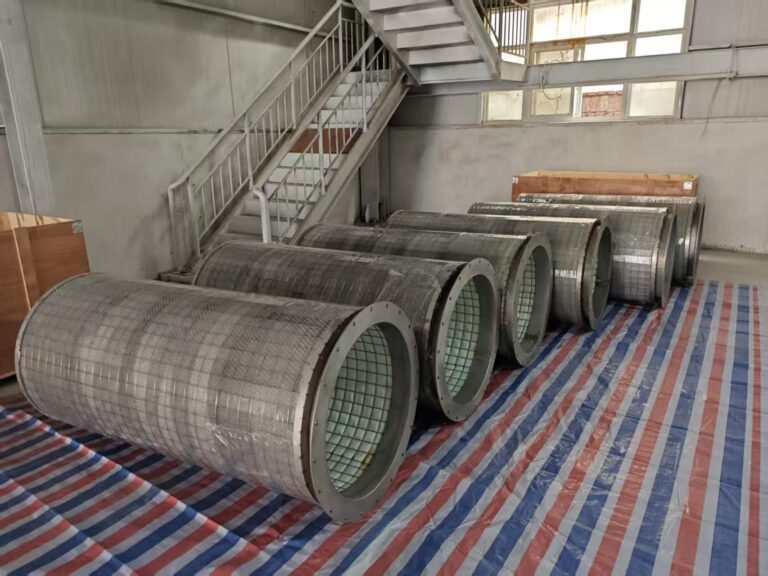
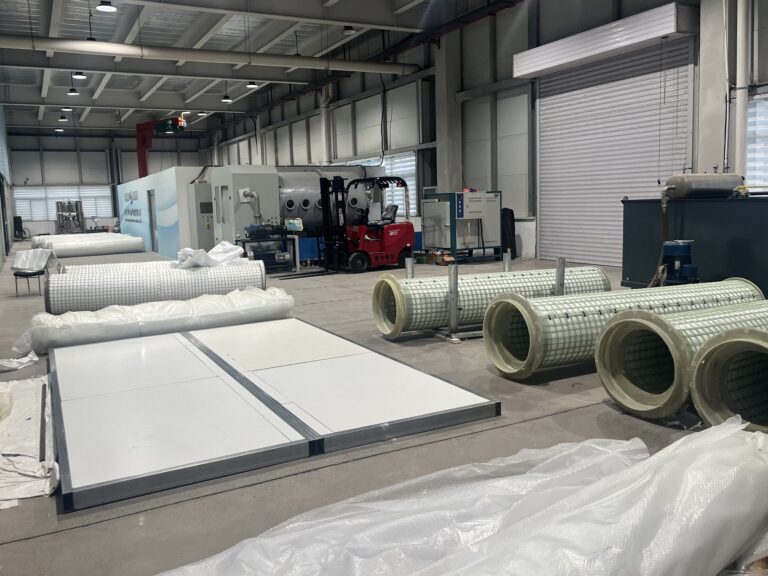
Filtearth designs and manufactures phosphoric acid mist eliminators for Latin American fertilizer plants using Filtearth proprietary carbon fiber for HF-containing service and proprietary glass fiber for concentrator service — achieving 99.96% removal efficiency at approximately 70% of the cost of European and American imported units, with a 30-day production lead time and full export documentation for Latin American customs clearance.
Latin America’s Phosphoric Acid Industry: Scale and Context
Latin America’s phosphoric acid production is concentrated in three main countries:
Mexico: Grupo Industrial Saltillo, Fertinal (now PEMEX Fertilizantes), and several independent producers operate wet process phosphoric acid plants in Lázaro Cárdenas, Veracruz, and Coatzacoalcos. Mexico is a significant phosphoric acid producer supplying the domestic fertilizer market and regional exports.
Colombia: Monómeros Colombo Venezolanos (a minority-owned subsidiary with Venezuelan state involvement) operates one of the region’s largest integrated phosphoric acid and fertilizer complexes in Barranquilla, producing phosphoric acid, DAP, and MAP for the Colombian and regional agricultural market.
Brazil: Mosaic Fertilizantes, Yara Brasil, and Acron Brasil operate wet process phosphoric acid plants in Minas Gerais, Goiás, and the Triângulo Mineiro region — one of the world’s most important phosphate rock producing zones. Brazil’s phosphoric acid production capacity is among the largest in the world outside Morocco and China.
Peru: Hochschild Mining affiliates and phosphate exploration companies in the Bayóvar region of Piura operate or are developing phosphoric acid production linked to the large Bayóvar phosphate deposit.
All of these facilities generate the same triple challenge at their reactor, flash cooler, and concentrator off-gas systems: H₃PO₄ mist, HF vapor, and solid carryover — simultaneously.
Why Phosphoric Acid Mist Eliminator Service Is Different in Latin America
The Triple Chemical Challenge
Wet process phosphoric acid production reacts phosphate rock with sulfuric acid. The chemistry generates three corrosive components in the off-gas simultaneously:
Phosphoric acid mist (H₃PO₄): Fine droplets generated during the reaction, flash cooling, and concentration stages. Droplet sizes range from coarse (above 10 microns) at flash cooler outlets to submicron aerosols from concentrator evaporators.
Hydrofluoric acid (HF): Latin American phosphate rocks — from Mexico’s Baja California deposits, Colombia’s Huila region, and Brazil’s Araxa complex — contain fluoride minerals that release HF during acid digestion. HF attacks standard glass fiber, stainless steel screens, and most polymer materials. Filtearth proprietary carbon fiber is the only fiber specification providing reliable long-term HF resistance for reactor vent and flash cooler applications.
Silica and gypsum solids: The phosphoric acid slurry contains suspended calcium sulfate (gypsum) and silica particles. Some of this solid material becomes entrained in the off-gas, particularly at reactor vent and flash cooler positions. Solid carryover accumulates in fine fiber structures, progressively fouling the element and requiring coarser fiber grades with enhanced drainage.
Latin American Operating Conditions
Several factors specific to Latin American fertilizer plant operations affect mist eliminator performance:
High ambient humidity: Coastal facilities in Brazil (Santos, Paranaguá), Colombia (Barranquilla), and Mexico (Veracruz, Lázaro Cárdenas) operate in high-humidity tropical environments. Elevated ambient humidity increases moisture content in process gas streams, raising mist generation rates above design in some operating periods.
Variable throughput: Latin American fertilizer plants frequently adjust production rates in response to agricultural seasons and commodity price cycles. Mist eliminators must perform reliably across a wide turndown range — from 60% to 120% of design throughput — without requiring reconfiguration.
Remote location logistics: Several major Latin American phosphoric acid plants — including Bayóvar (Peru), Lázaro Cárdenas (Mexico), and interior Brazil facilities — are located far from major ports. Element replacement logistics must be planned well in advance of the actual replacement need. Filtearth’s 30-day lead time reduces the planning horizon versus the 90-day lead times typical of European suppliers.
Phosphoric Acid Mist Eliminator: Application-Specific Engineering
Reactor Vent Service — Filtearth Proprietary Carbon Fiber
The reactor vent carries the highest HF concentration and the highest solid loading of all phosphoric acid off-gas positions. Standard glass fiber — including specialty glass fiber grades — is subject to progressive surface attack by HF at reactor vent concentrations.
Filtearth specification for reactor vent service:
- Fiber material: Filtearth proprietary carbon fiber — complete HF resistance at all operating concentrations
- Fiber grade: Coarse (15–25 μm diameter) for enhanced solid tolerance and drainage
- Shell material: FRP or PP
- Pre-separator: Recommended upstream of the fiber bed to remove bulk solid carryover
Flash Cooler Off-Gas Service — Filtearth Proprietary Carbon Fiber
The flash cooler generates the highest mist loading in the phosphoric acid plant — fine H₃PO₄ and H₂SiF₆ droplets at concentrations of 200 to 500 mg/Nm³. HF is present at significant concentration at this position.
Filtearth specification for flash cooler service:
- Fiber material: Filtearth proprietary carbon fiber — HF resistance
- Fiber grade: Medium-coarse for balance of efficiency and drainage
- High-drainage design: Enlarged sump and oversized drain nozzle
- Shell material: FRP or PP
Concentrator Evaporator Service — Filtearth Proprietary Glass Fiber
At the concentrator evaporator, phosphoric acid has been partially purified and HF concentration in the off-gas is significantly lower than at reactor and flash cooler positions. Filtearth proprietary glass fiber is appropriate for this service:
Filtearth specification for concentrator service:
- Fiber material: Filtearth proprietary glass fiber — fine grade for maximum submicron efficiency
- Shell material: FRP or PP
- Drainage: Standard design — liquid loading at concentrator is moderate
Operating Specifications
| Parameter | Reactor Vent | Flash Cooler | Concentrator |
|---|---|---|---|
| Fiber material | Proprietary carbon fiber | Proprietary carbon fiber | Proprietary glass fiber |
| Collection efficiency | 99.96% | 99.96% | 99.96% |
| Outlet concentration | < 10 mg/Nm³ | < 5 mg/Nm³ | < 5 mg/Nm³ |
| HF resistance | Required | Required | Standard glass sufficient |
| Pre-separator | Recommended | Recommended | Sometimes |
| Element diameter | 200–1,500 mm | 200–1,500 mm | 200–1,500 mm |
Environmental Compliance in Latin American Phosphoric Acid Plants
Mexico — SEMARNAT Standards
Mexico’s environmental regulator SEMARNAT sets emission limits for phosphoric acid and fertilizer plants under NOM standards and facility-specific environmental impact assessments:
| Pollutant | Emission Limit |
|---|---|
| Fluoride compounds | ≤ 3 mg/Nm³ |
| Phosphoric acid mist | ≤ 10 mg/Nm³ |
| Particulate matter | ≤ 50 mg/Nm³ |
The 3 mg/Nm³ fluoride limit requires HF-resistant fiber bed technology — standard glass fiber systems cannot achieve this limit when HF is present in the gas stream.
Colombia — MADS Standards
Colombia’s Ministry of Environment and Sustainable Development (MADS) applies emission resolution standards to phosphoric acid and fertilizer facilities. The Barranquilla industrial zone — home to Colombia’s largest phosphoric acid complex — is subject to increasing scrutiny from the regional environmental authority (CRA).
Brazil — IBAMA and State Environmental Authorities
Brazilian phosphoric acid plants are regulated by IBAMA at the federal level and by state environmental agencies (SEMAD in Minas Gerais, SEMA in Goiás). Operating licenses for new and expanded phosphoric acid capacity require demonstrated compliance with fluoride and particulate emission limits.
Cost and Lead Time Advantage Over European Suppliers
Latin American fertilizer plant procurement teams sourcing phosphoric acid mist eliminators from European suppliers face significant cost and logistics disadvantages:
| European Suppliers | Filtearth | |
|---|---|---|
| Unit cost | Baseline 100% | ~70% of European cost |
| Production lead time | 60–90 days | 30 days |
| Sea freight to Latin America | Long transit from Europe | Direct from China |
| HF-resistant fiber | Available (PTFE-based) | Filtearth proprietary carbon fiber |
| Documentation | Standard | Full export docs for Latin American customs |
| Spanish support | Limited | Available on request |
For a phosphoric acid plant requiring carbon fiber bed units at reactor, flash cooler, and concentrator positions, the total procurement cost saving versus European suppliers represents a significant capital cost reduction on a multi-unit order.
Logistics and Delivery to Latin American Ports
Filtearth works with freight forwarders covering major Latin American receiving ports:
- Manzanillo and Veracruz (Mexico): Primary ports for central Mexico fertilizer plants
- Lázaro Cárdenas (Mexico): For Michoacán and Guerrero industrial zone deliveries
- Cartagena (Colombia): For Barranquilla and Colombian interior deliveries
- Santos and Paranaguá (Brazil): Primary ports for São Paulo and Minas Gerais facilities
- Callao (Peru): For Bayóvar region deliveries
Complete export documentation provided as standard: commercial invoice, packing list, certificate of origin (China), material certificates, and inspection records. Spanish-language document support available on request.
Reference Installations
Phosphate Fertilizer Plant — Malaysia
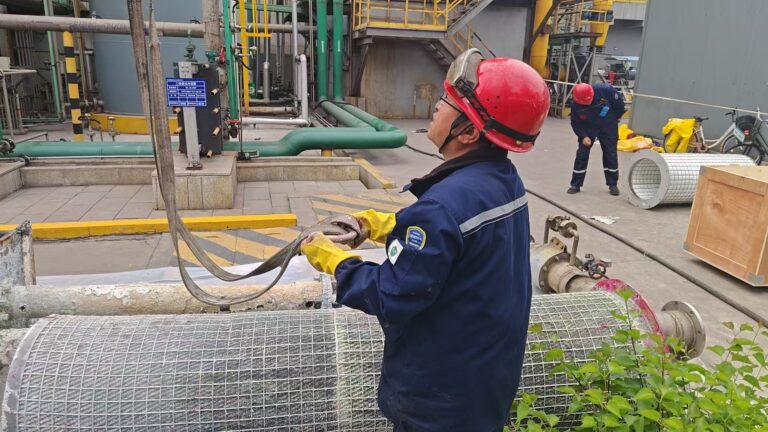
Filtearth proprietary carbon fiber bed mist eliminators in phosphoric acid concentrator service at a Malaysian phosphate fertilizer facility — same wet process chemistry and corrosive environment as Latin American phosphoric acid plants. Delivered within 30-day production cycle.
Sulfuric Acid Plant — China (400,000 t/a)
Filtearth fiber bed units in continuous absorption tower service at a large Chinese sulfuric acid plant — same corrosive engineering environment as phosphoric acid flash cooler service. Demonstrates long-term stable performance under demanding continuous duty conditions.
Drying Tower Retrofit — Kazakhstan
Custom-engineered fiber bed elements for elevated gas velocity conditions — demonstrates Filtearth’s capability to engineer solutions outside standard catalog parameters, applicable to Latin American plants with non-standard vessel geometries or throughput above original design.
Frequently Asked Questions
Why does a phosphoric acid mist eliminator in Latin America require Filtearth proprietary carbon fiber? Latin American phosphate rocks contain fluoride minerals that release hydrofluoric acid (HF) during wet process digestion. HF attacks standard glass fiber progressively, reducing collection efficiency and shortening element service life. Filtearth proprietary carbon fiber provides complete HF resistance at all reactor vent and flash cooler operating concentrations — the correct specification for long-term performance in Latin American wet process phosphoric acid service.
Can Filtearth supply phosphoric acid mist eliminators to Mexico, Colombia, and Brazil? Yes. Filtearth supplies fiber bed mist eliminators to fertilizer and chemical plants across Latin America. Complete export documentation is provided for customs clearance at Mexican, Colombian, and Brazilian ports. Spanish-language support is available on request.
What is the expected service life of a proprietary carbon fiber element in phosphoric acid reactor vent service? In reactor vent service with a wire mesh pre-separator upstream to remove bulk solid carryover, Filtearth proprietary carbon fiber elements typically achieve 2 to 4 years of service life. Without pre-separation in high-solids service, element life may be 1 to 2 years. A pre-separator is strongly recommended for all reactor vent applications.
Can existing vessels be retrofitted with Filtearth carbon fiber elements? Yes. Filtearth designs proprietary carbon fiber replacement elements matched to existing vessel internal dimensions. Plants currently operating standard glass fiber or polypropylene fiber bed elements in phosphoric acid service can upgrade to carbon fiber construction without vessel modification. Element diameters from 200 to 1,500 mm are available.
What connection standards are used for Latin American projects? ANSI 150# and 300# are the standard flange connections for Latin American chemical projects. Filtearth supplies all flanged connections in ANSI standard as default. DIN or JIS connections are available on request.
How does the 30-day lead time affect plant maintenance planning? Latin American plants planning element replacement during annual shutdowns typically order 60 to 90 days before the shutdown date when sourcing from European suppliers — to allow for production lead time and shipping. With Filtearth’s 30-day lead time and 25 to 35 day sea freight transit to Latin American ports, total delivery time is 55 to 65 days — allowing procurement planning to begin closer to the actual shutdown date and reducing working capital tied up in advance inventory.
Internal Links
For technical background on fiber bed mist elimination principles, see the complete guide: What Is a Fiber Bed Mist Eliminator?
For phosphoric acid mist eliminator technical specifications covering HF and solids challenges in detail, see: Phosphoric Acid Mist Eliminator
Request a Technical Quotation
Filtearth is ready to provide a phosphoric acid mist eliminator technical proposal and commercial quotation for Latin American fertilizer plant applications within 24 hours.
To receive a quotation, please provide:
- Plant location and annual phosphoric acid production capacity
- Application position (reactor vent, flash cooler, or concentrator evaporator)
- Gas flow rate (Nm³/h) per position
- Operating temperature and pressure
- HF concentration in gas stream (if known)
- Estimated solid loading (if known)
- Existing vessel dimensions (for retrofit applications)
- Required delivery port
Contact Henry Wang directly: Email: [email protected] WhatsApp: +86 159 365 10880
Response within 24 hours. Spanish-language support available. Export documentation for Latin American customs provided as standard.